The Story
Why it exists.
The beginning
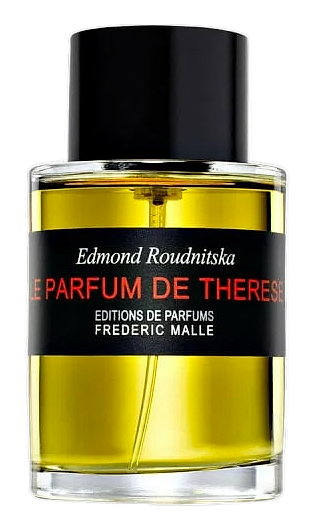
Edmond Roudnitska created Le Parfum de Therese in the early 1950s, but not for shelves. For Thérèse. His wife. It remained in her private collection until she decided the world should have it. She licensed the formula to Frédéric Malle in 2000, and Malle, who built his entire house around the idea that great perfume cannot be engineered by committee, released it unchanged. Roudnitska created this fragrance for the woman he loved. That origin hasn't been touched by marketing.
The composition itself was built ahead of its time. Fruity-aquatic accords that wouldn't become mainstream for decades, melon, plum, a whisper of cucumber, paired with a leather base that Roudnitska calibrated to stay intimate, not perform. The rose heart isn't a bouquet. It's the quiet center of something already restrained. This is what happens when a master perfumer has one clear recipient in mind, unconstrained by commercial considerations.
The evolution
The opening arrives fast. Tangerine sharpens, melon follows, and the whole thing sits cool and bright for a while. Then the rose and plum arrive together, not a gradual shift but a clean hand-off, like turning a page. The heart carries the fragrance for most of its life, lush and fruited without tipping into sweetness. When it finally releases, the base is already there: blond leather, vetiver, cedar. The leather doesn't project. It stays close, almost shy, warming quietly against the skin for the remaining hours. On fabric, the whole thing lingers softer but longer, you find it there the next morning, muted and warm.
Cultural impact
Le Parfum de Therese occupies a singular position: a fragrance that pre-dates the fruity chypre genre, released into a market that had eventually caught up to it. Roudnitska, who died in 1996, never saw his private formula enter the world, but the 2000 launch placed it directly into Malle's collection of radical, emotionally complex works, alongside perfumers who were still active. Among Malle's roster, it remains one of the most personal entries: a love letter made public, signed by one of the most respected noses of the 20th century.