The Story
Why it exists.
The beginning
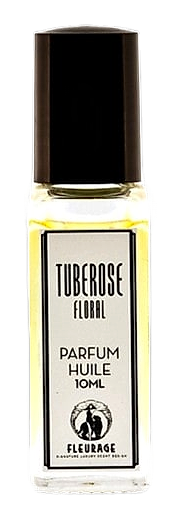
Tuberose Floral is built around one decisive flower. Tuberose is known for its waxy, honeyed white-floral character, but here it’s treated with a cool green accord and an animalic depth that makes the blossom feel less innocent than its pale petals suggest. The fragrance is attributed to Emma Jane Leah, whose name appears as the perfumer behind the composition. No specific launch year is recorded in the available references, so the origin stays deliberately close to what the scent itself reveals: a floral with a pulse, composed around the meeting of a soft, honeyed flower and contrasting green and animalic accents. The note structure gives tuberose a clear identity, with its pale floral character held in balance by cooler and darker elements.
The unusual part is the tension inside the main accords. Tuberose supplies the waxy white floral center, green adds a clipped, leafy counterweight, and animalic brings a darker, skin-adjacent undertone. That combination keeps the composition from becoming a simple pretty-flower perfume. Tuberose can be lush and sweet on its own, but here it is paired with contrasting accents that give the floral material additional texture. The green accord changes the way the flower is perceived, while the animalic facet adds depth beneath its pale surface.
The evolution
At first, Tuberose Floral presents its white floral character through a waxy, honey-like softness. The green accord keeps a cool, leafy thread running through it, changing the sweetness of the central flower with a contrasting herbal note. The opening is therefore shaped less by tuberose alone than by the interaction between its soft floral profile and the sharper tonal quality of green. As the composition develops, the animalic accord contributes a darker layer beneath the flower. The available references identify these as the core accords, while no verified details describe a specific sequence of changes or a timed drydown.
Cultural impact
Tuberose Floral focuses on a familiar floral material while placing it within a composition of contrasting accords. Tuberose provides a waxy, honeyed white-floral center, green adds a cool leafy dimension, and animalic introduces a darker, skin-adjacent quality. These elements give the central flower a more complex presentation than a standalone floral accord. The composition is attributed to Emma Jane Leah and released under the Fleurage name, making the note structure and perfumer credit the most reliable points of reference for understanding its identity.
The House
FleurageThe Creator
Emma Jane LeahLeah brings both natural and synthetic materials into her work, drawing on her dual qualification. Her background in commercial industrial perfumery gives her formulas structural integrity, while her natural perfumery training grounds her in traditional craftsmanship.