
The Story
Why it exists.
The beginning
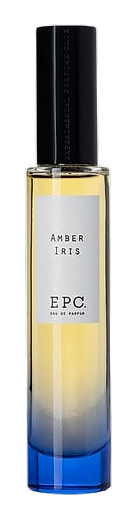
Amber Iris was released in 2019 as part of EPC's small-batch line, centered on the essence of the true Oriental. The idea came from wanting to revisit the classic amber structure, vanilla, frankincense, myrrh, labdanum. Emmanuelle Moeglin paired those warm resins with Italian iris absolute and ambrette seed absolute, two materials known for their powdery, earthy character. The combination creates a warm, inviting impression that feels both deep and approachable. There's a natural balance at work, where the resinous depth of the amber base meets the delicate, slightly floral quality of the iris, creating something that feels rich without becoming overwhelming.
What makes Amber Iris structurally interesting is how the ambroxan functions as both fixative and feature. It extends longevity significantly, but it also shifts the composition's character toward animalic warmth rather than clean projection. The Indonesian patchouli leaf adds an earthy quality that prevents the vanilla and benzoin from becoming sweet. Combined with the styrax and labdanum, you get a balsamic base that smells resinous and complex without being heavy. The iris absolute brings a powdery softness to the heart, creating a cool register that tempers the warm base beneath it.
The evolution
The opening is brief. Pink pepper arrives sharp and rosy, maybe thirty seconds, before the ambrette seed absolute takes over and the whole thing shifts toward warmth. That transition is the tell. The heart notes, myrrh, labdanum, styrax, build slowly, a slow burn rather than a burst. The Indonesian patchouli keeps things grounded and resinous. Then the vanilla and benzoin arrive, and the composition settles into something warm, powdery, and close to the skin. The ambroxan carries it through the drydown, which on most skin types holds for six to eight hours. The next day, there's a faint trace on fabric, resinous, warm, still present.
Cultural impact
Amber Iris arrived as a 2019 release that took classical Oriental construction in a cleaner direction. Rather than relying on heavy-dose sandalwood, the formula leans on ambrette seed and iris to achieve a modern sensibility. The warm amber category traces back to 1920s perfumery when houses like Guerlain and Caron set the standard for resinous, vanilla-heavy compositions. EPC's approach removes the opulence associated with classic Orientals, replacing heavy ingredients with materials that feel more refined and less overwhelming.