The Story
Why it exists.
The beginning
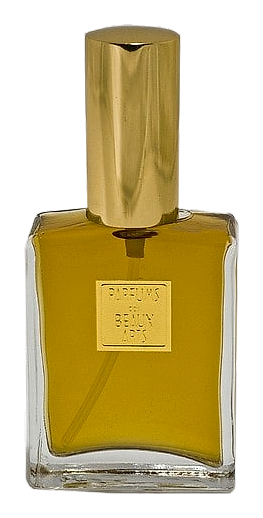
Dawn Spencer Hurwitz created Megaleion as a study in sacred aromatic traditions, specifically, the ancient Egyptian art of temple perfume. The fragrance takes its name from Megalus, an ancient perfumer believed to have formulated the original Megaleion around 1000 BCE, making it one of the first recorded 'designer' fragrances in history. DSH brought that lineage into the modern era, replacing ancient base materials with contemporary equivalents while keeping the structure intact. The result is a bridge between civilizations, the resins burned for pharaohs, the agarwood of today, arranged on the same principle of balsam and smoke.
What makes this composition unusual is the density of balsamic materials working in parallel. Myrrh, frankincense, peru balsam, and copaiba balsam don't take turns, they layer. The agarwood isn't a base note waiting in the wings; it arrives early, threading through the resins before they fully open. Bulgarian rose adds a quiet floral tension that keeps the smoke from becoming one-dimensional. Costus and spikenard, materials rarely seen in modern perfumery, add an almost medicinal edge that reads as antiquity without smelling dated. This isn't a recreation of an ancient smell. It's the concept of ancient perfumery, interpreted with 21st-century materials.
The evolution
The opening arrives thick. Resinous, balsamic, almost sticky, myrrh and peru balsam dominate the first minutes. Beneath that density, bergamot and lemongrass provide a brief flicker of freshness before the incense establishes itself. The heart is where complexity arrives: agarwood, labdanum, and cardamom interweave. Bulgarian rose surfaces quietly, then retreats. Frankincense smoke builds. By hour two, the composition has shifted entirely from sacred resin to woody depth. The drydown belongs to agarwood and amber, with cedar and sandalwood lending warmth. Four to six hours in, Megaleion settles close to skin, present but not announced. On fabric, a faint trace of resin remains the next morning.
Cultural impact
Megaleion draws its name and inspiration from the legendary holy anointing oil of antiquity, a formula said to contain numerous aromatic ingredients including myrrh, cinnamon, and other precious resins. The actual historical Megaleion was a famous perfume from antiquity, mentioned by ancient writers as one of the great perfumes of the ancient world, notably from the Greek city of Cyzicus. This fragrance pays homage to that tradition by incorporating many ingredients that would have been at home in ancient perfumery: costus root with its unusual animalic character, spikenard prized since biblical times, and the sacred resins frankincense and myrrh.