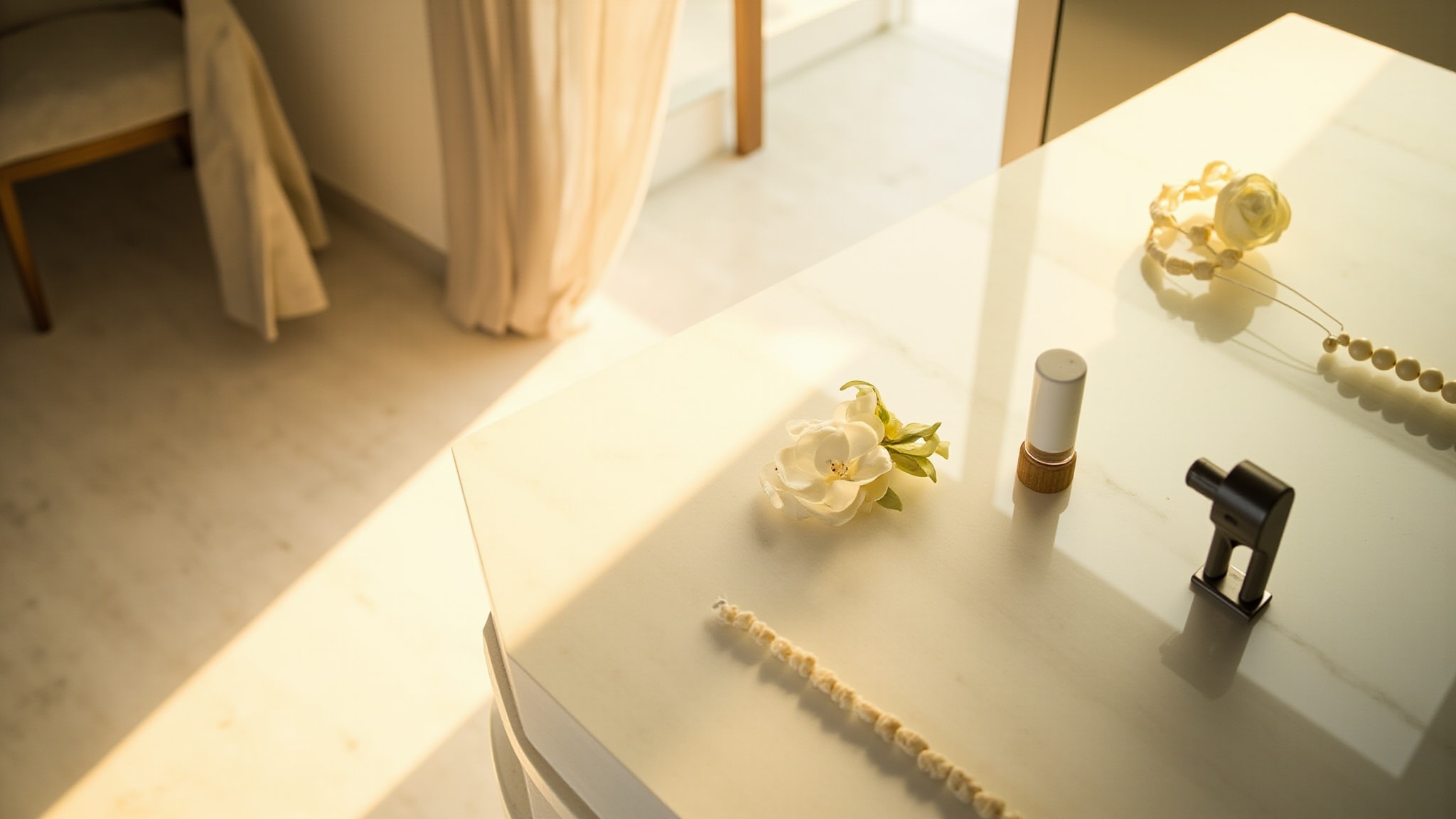
The Story
Why it exists.
The beginning
Classic Gardenia arrived in 1995. The name says everything: no clever wordplay, no exotic geography, just the flower itself. This wasn't about novelty or surprise. It was about doing one thing well and doing it with conviction. Gardenia as the subject. Gardenia as the statement. Everything else in the formula exists to support that central bloom, to give it space and structure rather than compete with it. The gardenia opens with a rich, buttery creaminess that feels lush and enveloping, like stepping into a sun-drenched greenhouse where the flowers are at their peak. There are green, leafy nuances underneath that add a natural, almost dewy quality, preventing the floral from becoming static or flat.
Gardenia presents a particular challenge in perfumery, the actual flower yields almost nothing in extraction, so perfumers rely on synthetic substitutes or fractionated absolutes that capture different facets of the scent. This means the quality of a gardenia fragrance lives or dies on the perfumer's formulation. The creamy, almost vertiginous quality of good gardenia comes from lactones, those same molecules that give peach and coconut their characteristic softness. Dana's formula leans into this lactonic richness, letting the gardenia read as both floral and slightly edible.
The evolution
The opening announces itself immediately, gardenia, creamy and insistent, with a slight green undertone that recalls the stem and leaves of the flower. There's no gradual build here. It arrives fully formed. Within minutes, the fruity notes emerge, not a specific fruit, but a generalized warmth, like the memory of eating something sweet in summer. The transition from flower to fruit happens smoothly, as if the gardenia is simply ripening. By the heart, the composition has settled into something rounder and softer. The woody base gradually makes its presence known, adding structure without sharpness or intrusion. The drydown is where this fragrance earns its name, gardenia at its most restrained, almost skin-like, held in place by a woody base that keeps it present for hours.
Cultural impact
Classic Gardenia occupies a quiet position in 1990s feminine perfumery, neither avant-garde nor safe, but assured in its choices. The decade saw white florals gaining prominence as women's fragrance moved toward richness and presence. This fragrance belongs to that wave, offering a clear and confident vision of what gardenia can be. Its appeal lies in its straightforwardness: gardenia as gardenia, without pretension. The scent presents itself with honesty, letting the flower speak for itself rather than dressing it up in elaborate storytelling or dramatic effects.