The Story
Why it exists.
The beginning
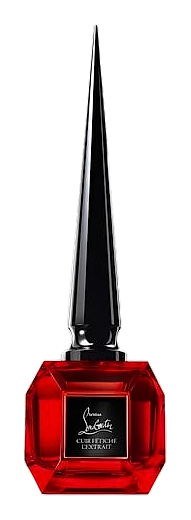
Cuir Fétiche L'Extrait was created by Juliette Karagueuzoglou and launched as part of Christian Louboutin's Fétiche collection. The name itself is a thesis statement: fétiche, fetish, the object of devotion. The extrait format pushes that devotion to its most concentrated point, stripping away the lightness of an eau de parfum and arriving at something closer to a ritual object. The official inspiration is velvety leather against bare skin, and the entire composition is built around that single image, one note repeated until it becomes a mood rather than a material. What makes the extrait format different is density. The oils sit closer to the skin than a spray would, moving with your body heat rather than floating away from it.
What's distinctive here is the radical minimalism. Two notes, leather and osmanthus, carry the entire weight of an extrait concentration. The osmanthus is the move: it gives the leather a fleshy, almost edible quality, a sweetness that reads as skin rather than sugar. Without it, the leather would stay cold and sculptural. With it, the whole thing breathes. The pairing is unusual because osmanthus has its own leathery facet, a fruity, almost cured quality that mirrors what the leather note is doing from the opposite direction.
The evolution
The first 15 minutes are about confrontation. The leather arrives first and loud, with a dry, almost acrid edge that reads more like smoke than hide, the kind of opening that fills a coat collar and makes you check if something is burning. Osmanthus is already threading underneath, but it stays hidden, a bruised-fruit sweetness beneath the char. The accords describe it as animalic, and that word earns its place in the first half hour, when the leather's warmth sits on skin like a second layer of body heat. As the first hour folds into the second, the balance shifts. The leather loses its sharp edges and rounds into something closer to suede, soft and slightly powdery. The osmanthus steps forward, no longer the hidden note but the one defining the space, its apricot-and-leather quality merging with the base so completely that it's hard to tell where one ends and the other begins.
Cultural impact
The osmanthus here pulls the composition toward something more ambiguous, more intimate, closer to the body. It's a leather fragrance that doesn't read as traditionally rugged; the floral sweetness softens the edges and makes the material feel worn-in rather than new. The extrait format reinforces that closeness, keeping the scent pressed against skin rather than broadcasting into a room. The whole composition rewards proximity: the wearer catches the warmth of the leather and the fruit of the osmanthus more clearly than anyone standing further away.