
The Story
Why it exists.
The beginning
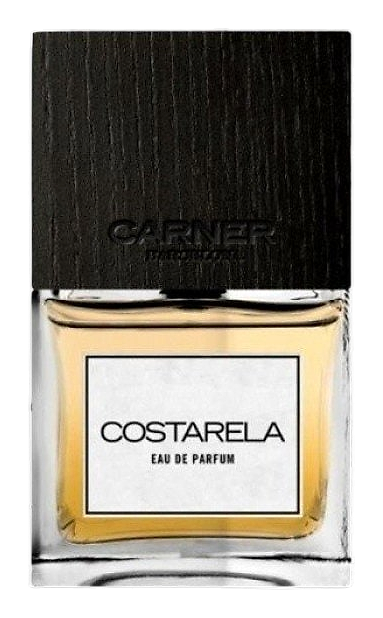
Costarela comes from Carner Barcelona, the Spanish house launched in the early 2010s. Launched in 2016, it was composed by Shyamala Maisondieu, a perfumer whose career spans houses like Dior, Givaudan, and Symrise before she struck out independently. The composition leans into exactly that territory: the stretch of sand where the land meets the water, captured without the usual sunscreen-and-cocktail shorthand. The Original Collection reads like a postcard from one of those coves just past the tourist path, and Costarela fits that bill with its quiet confidence.
The interesting choice here is sand as a heart note, which is less common than it sounds. Sand in perfumery usually arrives as a mineral texture or a husky warmth, and paired with marine notes it creates something that reads less like a cologne and more like a physical place. Maisondieu builds around that ambiguity: Italian bergamot gives the opening its lift, and the whole thing lands on a base of ambroxan, cedarwood, and amber that does the heavy lifting without ever feeling heavy. It's a structure designed to feel effortless while doing considerable work underneath.
The evolution
Costarela was composed in 2016 by perfumer Shyamala Maisondieu for Carner Barcelona's Original Collection, and it arrived as a Mediterranean sketch of coast rather than a traditional cologne. The opening draws on Italian bergamot and saffron to set a warm, sunlit top before the composition drops into a marine-sand heart, and the base settles into ambroxan, cedarwood, and amber. The structure has held up remarkably well since launch, and the fragrance continues to attract wearers who want something that feels like a place rather than a personality. In practice, the scent behaves like a well-built coastal composition: it opens cool and bright, holds a mineral middle that carries most of the day, and finishes in a warm, woody drydown that stays close to skin.
Cultural impact
Costarela sits comfortably in the fresh-citrus-aquatic category without reading like a crowd member. Wearers tend to describe it as the scent of a specific kind of afternoon rather than a personality statement, and it occupies a warm, textural space within that broader category through its sand and amber base. It's the kind of fragrance that gets worn by people who don't think of themselves as fragrance people, and that accessibility is part of what makes it land.