The Story
Why it exists.
The beginning
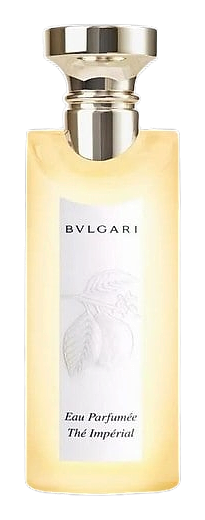
Thé Impérial didn't start in a boutique. It started in a lobby, the olfactory signature for Bvlgari Hotels & Resorts, developed in 2017 to make arriving guests feel like the brand itself had exhaled around them. The idea was simple: take something universally Italian, pair it with something that transcends geography, and let them argue pleasantly. Citrus and tea. Brightness and depth. A morning ritual and an afternoon one, worn at the same time. When the fragrance proved popular enough that guests kept asking for the bottle, Bvlgari listened. In 2026, Thé Impérial left the hotel and entered the Eau Parfumée collection, officially, finally, for anyone who wanted it.
The choice of black tea as the structural heart is what makes this work. Not green tea, with its vegetal sharpness. Not oolong, with its dark complexity. Black tea sits in the middle, tannins that grip, a warmth that builds, a flavor that changes depending on whether you add sugar, lemon, or nothing at all. Jacques Cavallier-Belletrud understood that black tea is a personality, not just a note. It carries citrus without being overwhelmed by it. It welcomes musk as a partner, not a filler. The composition doesn't try to smell expensive or rare. It tries to smell like a specific moment: the first cup of the morning, before the day has decided what it's going to be.
The evolution
The opening is immediate and clean, Italian citrus fruits, the kind that smell like they've been sitting in sun-warmed wooden crates at a Roman market. For the first twenty minutes, it's sharp and almost astringent, the citrus pulling the skin taut. Then the black tea arrives, and everything softens. Not dramatically, the transition is subtle, like watching fog roll in from the coast. The tea doesn't replace the citrus; it contextualizes it. By the hour mark, the two are inseparable. Musk enters last, arriving not as a base note in the traditional sense but as a warmth that rises from the skin itself. The drydown reads as skin, not perfume. Clean, slightly powdery, the ghost of something someone might lean close to identify. On fabric, the citrus fades faster and the tea holds longer, expect four hours on cotton, closer to three on skin that's dry or cool. The next morning, there's nothing left but a faint trace of musk on fabric. The tea doesn't linger. That's honest.
Cultural impact
Thé Impérial arrived in 2026 already having lived a secret life in Bvlgari hotels. That's a rare trajectory, most fragrances launch and then find their audience. This one had its audience first, in guests who smelled it, asked for the bottle, and were told it wasn't for sale. The 2026 release is less a debut than an unveiling. Where it sits in the wider world of tea fragrances is still forming, but the early consensus is clear: this isn't trying to compete with the heavy hitters of the genre. It's lighter, cleaner, more citrus-forward. It's for people who want to smell like tea without committing to tea's usual depth. Whether that makes it a gateway fragrance or a genre refinement depends on who you ask, and both answers are probably right.