
The Story
Why it exists.
The beginning
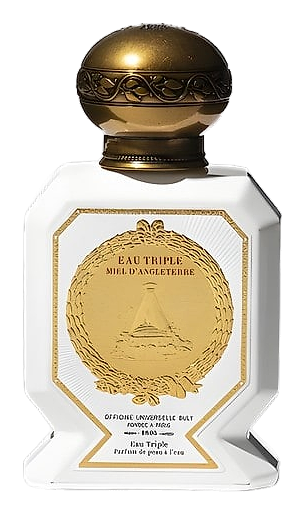
Miel d'Angleterre translates to English Honey, but the scent isn't English in any conventional sense. It's named for the material itself, not a place or moment. Buly 1803 built this fragrance around a single audacious premise: what if honey smelled like honey, not like honey-flavored something? The 2014 release arrived as part of the revived house's return to apothecary perfumery, when Ramdane Touhami and Victoire de Taillac were reconstructing Jean-Vincent Bully's 19th-century formulations. Miel d'Angleterre fits that mission precisely, a fragrance that names what it contains and trusts the wearer to understand the difference between a note and a concept.
The Eau Triple format is central to understanding this fragrance. Water-based and alcohol-free, it behaves differently than conventional perfume, it sits closer to skin, projects more softly, and evolves with a different rhythm. The honey doesn't blast. It accumulates. Paired with mahogany and cedar, the composition reads like the smell of a reading room in late afternoon: warm wood, the faint sweetness of beeswax, and something alive underneath. That's the tension Buly was after, sweet without softness, woody without sharpness.
The evolution
The opening arrives quiet. Honey water, beeswax, a hint of something floral underneath, rose, maybe, or the ghost of it. There's no dramatic entrance. For the first twenty minutes, the fragrance feels almost translucent, like leaning close to a jar of honey and breathing in the vapor above it. Then the mahogany and cedar step forward. The wood notes don't overpower, they frame. They turn the honey from a single note into an atmosphere. The drydown is where this fragrance earns its reputation. Six to eight hours in, on most skin, the honey has settled into something warmer and closer: amber, cashmeran's powdery warmth, and cedar that lingers like wood paneling in an old library. The sillage stays moderate throughout, this isn't a fragrance that announces itself. It waits for you to come close.
Cultural impact
Miel d'Angleterre occupies a specific corner of niche perfumery, the honey fragrances that refuse to be gourmet. Released in 2014 alongside Buly 1803's revival, it arrived before the wave of 'realistic' fragrance materials became a trend. The response split clearly: some wearers found it the most honest honey scent they'd encountered, others expected sweetness and found restraint. That division hasn't resolved, and it probably shouldn't. Buly's approach has never been about universal appeal.