The Story
Why it exists.
The beginning
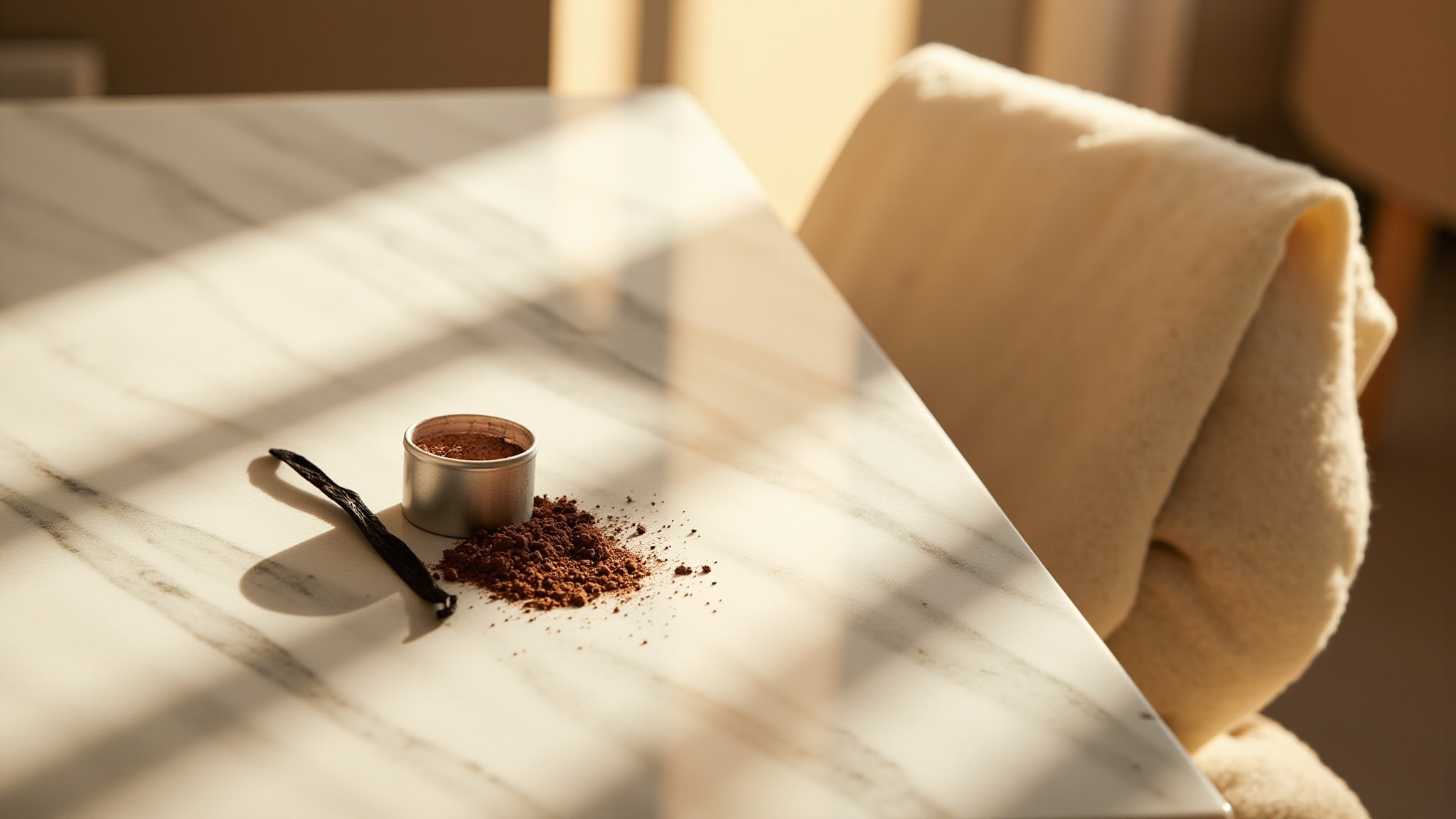
Pierre Stephane Rubis built Cacao around a simple provocation: what happens when you take cocoa and vanilla seriously, not as supporting players but as the main event? The name is a declaration. Cacao, launched in 2016, was designed to put the ingredient itself at the center, not hidden in an accord, not subsumed by florals, but present and unmistakable. The perfumer understood that cocoa carries both sweetness and bitterness, and that vanilla is never just sweet. The tension between those two realities is what makes the fragrance work. It's not trying to smell like a chocolate bar. It's trying to smell like the idea of chocolate: the warmth of it, the memory of it, the late-night quality of wanting more.
What makes Cacao distinctive is the pairing of cocoa with Bourbon vanilla, not synthetic vanillin, not a sweetened cream accord, but the actual pod. This matters because real Bourbon vanilla has a turpentine-like sharpness beneath its sweetness, a resinous depth that synthetic alternatives flatten. In Cacao, that sharpness gives the cocoa something to push against. The result is not a smooth, linear sweetness. It's a fragrance that alternates between confection and earth, between warmth and something that lingers almost darkly. Patchouli anchors the whole thing, and its fermented, slightly animalic quality prevents the drydown from reading as mere dessert.
The evolution
The opening announces itself with bright citrus, Sicilian bitter orange cutting through like a clean spark. It's crisp, a little sharp, completely unexpected if you came here for cocoa. Then the citrus fades and something earthier takes over. African geranium appears with its green, slightly medicinal quality, floral but not soft, more herbaceous than romantic. It shifts the fragrance's trajectory entirely. This is not where most people expect to be. By the heart, patchouli has fully arrived. Earthy, dark, slightly fermented, it dominates the almond and creates a middle register that some find compelling and others find too much. It's the fragrance's most polarizing moment. Then the drydown: cocoa and Bourbon vanilla together, the promised warmth arriving late, warm but not linear. It reads as true chocolate, not milk, not white, but dark chocolate powder mixed with vanilla cream. The patchouli never fully disappears. It threads through the drydown, keeping the sweetness honest.
Cultural impact
Cacao arrived during a renewed fascination with edible gourmand fragrances, part of a broader cultural moment where scent lovers sought warmth and comfort through fragrance. Cocoa-based perfumes occupy a niche within the oriental family, rarely executed with restraint. The 2016 launch coincided with a period when niche houses were challenging mainstream sweetness, positioning Cacao as a study in balance rather than pure indulgence. Its cocoa-vanilla drydown echoed contemporary appetite for desserts in scent form while the citrus and geranium opening kept it grounded in a more sophisticated tradition.