The Story
Why it exists.
The beginning
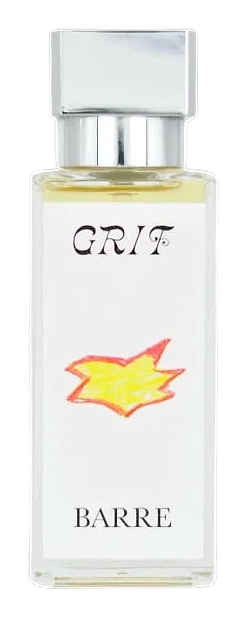
Grit arrived in 2026 as the latest dispatch from Bree Hyland's BARRE studio. Hyland, a visual artist, treats each release as something closer to a conceptual gesture than a product, and Grit continues that practice with a name that refuses romance. It reads less like a fragrance label and more like a sentence pulled from a notebook. The composition follows suit: motor oil, damp wood, rubber, mud, frankincense, and black pepper, arranged without concession to convention. Every element is literal enough to feel found rather than blended, and the resulting scent carries an almost unprocessed honesty that distinguishes it from the genre's more polished offerings.
The note pyramid is unusually literal for a fine fragrance. Motor oil, rubber, mud, and metallic notes don't get dressed up or abstracted. They appear almost unprocessed, which forces a different kind of smelling. The pepper and frankincense function as the only traditionally perfumery elements, and even those get pulled toward something raw. The motor oil brings a warm, greasy warmth that recalls a garage in late summer. The rubber adds a dry, slightly burnt sweetness, the kind that clings to a tire after a long highway drive.
The evolution
The opening is all pepper and metallic noise, sharp enough to clear a room and warm enough to hold attention. Motor oil surfaces quickly, not as a nuance but as a statement, and the frankincense arrives almost immediately to keep it from reading as purely industrial. The initial phase has a confrontational quality, the kind of scent that announces itself before you've even lifted your wrist. As the top layer begins to settle, the composition grows more composite. Damp wood and mud take over the architecture, with rubber threading through underneath. The metallic accord stays present but recedes into texture rather than leading, shifting from a bright flash to something more like a cool hum beneath the heavier notes. The wood deepens into something closer to wet bark than fresh lumber, and the mud takes on a richer, more mineral character.
Cultural impact
Grit occupies a distinctive place in the earthy-woody space because of how directly it handles its materials. The rubber and motor oil are not bug fixes to be sanded down. They are the point. Rather than burying industrial notes beneath layers of abstraction, the composition presents them almost unprocessed, forcing a different kind of engagement from the wearer. The frankincense adds a faint sacredness to the mess, and the pepper keeps the whole thing sharp. Within niche perfumery's broader conversation about literalism and conceptual scent, Grit pushes further than most by refusing the genre's usual greenery.