
The Story
Why it exists.
The beginning
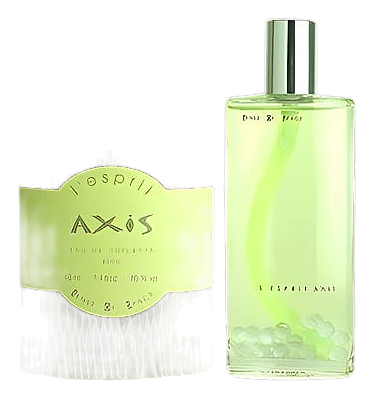
L'esprit, released in 2010, sits inside a particular philosophy of perfumery. No theatrical names, no invented mythology, no perfumer credit chasing the bottle. The brand calls it a women's fragrance and trusts the composition to do the talking. The name itself, L'esprit, gestures toward something intangible, the spirit, the mind, the essence of a thing rather than its surface. Axis treats that abstraction as a brief: strip away the ornamental, let green and florals breathe without shouting over each other. It reads less like a fragrance built around a story and more like a sketch of a mood, something quiet and considered, the kind of presence you'd register before you'd describe it. The composition moves with a certain hush to it.
What's worth noticing is how few notes L'esprit claims. The source data lists only three: Floral Notes, Grass, and Green Notes. Most compositions this stripped-down either bore you or go one-note. L'esprit manages a tension between its floral and grassy halves, and the green accord runs underneath both like a current. That restraint is distinctive. L'esprit stays cool throughout, from the first minutes on skin to the final hours of drydown. The grass note does unusual work here, carrying something of the sharpness of cut stems without the sweetness of hay.
The evolution
The first ten minutes are the greenest L'esprit gets. Grass dominates, cool and aqueous, with a faint sweetness underneath that hints at florals still arriving. There's almost a mineral edge to it, the smell of crushed stems releasing their moisture. Thirty minutes in, the florals settle in. They stay abstract, never resolving into a recognizable bloom, but they soften the grass and add a cool, slightly powdery texture. The green accord doesn't disappear; it shifts register, less stem and more leaf, less wet and more alive. This is the phase most people describe as the 'clean' part of the fragrance. By the two-hour mark, L'esprit has quietened considerably. What remains is a faint floral-green ghost, close to the skin, intimate rather than projected. On a sweater the next morning, you'll catch a trace of it, dried green and something faintly sweet, like grass that was cut hours ago and left in the sun. It doesn't demand reapplication because it never announced itself loudly in the first place.
Cultural impact
L'esprit sits in a quiet corner of the green-floral category, a composition that values everyday minimalism over seasonal drama. It's the kind of fragrance that rewards proximity rather than projection, something meant to be discovered by the wearer rather than announced to a room. The composition's restraint reads as confident to some and as under-developed to others, and that divide is probably the most honest thing you can say about its reception.