
The Story
Why it exists.
The beginning
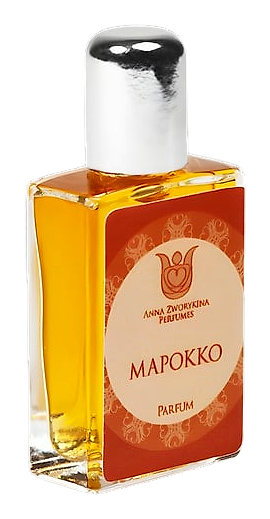
Morocco, the country, the concept, the heat-haze over Marrakech souks, gave Anna Zworykina her brief. The name isn't a border; it's an invitation. Spices traded coast to coast, roses grown in mountain valleys, incense that has moved through North Africa for centuries, this is the olfactory territory she set out to map in 2009. The fragrance is a translation of place into material, one perfumer's reading of what Morocco smells like from the inside.
What makes Morocco unusual is the double rose. Bulgarian rose, the canonical European floral, shares space with Moroccan rose absolute, which carries a warmer, more resinous quality. Neither overpowers the other. Instead they operate in parallel, Bulgarian rose providing the crystalline clarity at the top while Moroccan rose slowly emerges as the composition breathes, adding depth that a single rose note couldn't achieve. The spice structure, cardamom, nutmeg, ginger, keeps the florals from reading sweet. Incense and choya loban push everything toward smoke without making the fragrance heavy. It's a careful balance: warm without being dense, floral without being sweet, smoky without being austere.
The evolution
The opening hits sharp and immediate, cinnamon and incense arriving together, with ginger adding clean heat that prevents the spice from becoming dusty. Within the first hour, both roses arrive at different speeds: Bulgarian rose clears the air while Moroccan rose settles lower, into the skin. The middle phase holds for several hours, incense smoke threading through the florals, vetiver and patchouli establishing themselves in the base. By hour four, the fragrance has flattened into a warm amber-resin trail that stays close to the body, present but not announced. On fabric, the drydown can linger into the following day, faint and satisfying.
Cultural impact
Morocco occupies a particular space in the niche fragrance landscape: warm enough for winter evenings, floral enough for those who find pure orientals too heavy, smoky enough to intrigue without overwhelming. The double-rose structure is unusual, most fragrances pick one rose tradition and commit. Using both Bulgarian and Moroccan rose simultaneously requires confidence in the materials and in the wearer's willingness to engage with complexity. For collectors who seek the handcrafted over the advertised, Morocco represents a specific kind of trade: spice-route warmth for a niche-house price, made by a perfumer who has built her reputation on natural materials and direct dialogue with her audience.