The Story
Why it exists.
The beginning
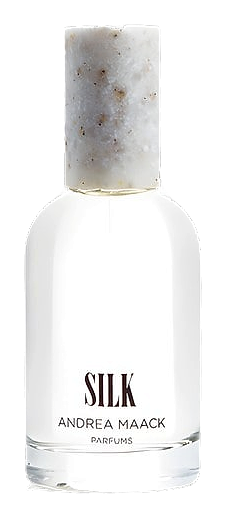
Silk arrived in 2011, marking a clear departure in Andrea Maack's early collection. The fragrance opens with violet leaf and citrus, a combination that reads as bright and distinct. White florals follow, bringing a delicate presence to the composition. Papyrus and soil tincture add an earthy element that anchors the florals. The result is a fragrance that feels clean and present, with a warmth that develops as it settles on skin.
The white florals here, magnolia and freesia, aren't the tropical kind. They have a cool quality that pairs with the opening rather than fighting it. The soil tincture grounds the florals in something earthier rather than garden-like. Vanilla and amber arrive late, but they don't overwhelm. They linger close, intimate rather than announced. The paradox of this fragrance is its name. Called Silk, it feels more like polished stone than soft fabric. The structure and material choices give it a considered feel.
The evolution
Skin chemistry determines how the florals arrive, but they always do. Violet leaf opens the composition, green and ozonic, before magnolia and freesia bloom through it. The soil tincture appears in the heart, an earth note that stands against the delicate florals. As magnolia fades, papyrus appears, dry and distinct, which then yields to amber and vanilla that settle close and stay. What lingers longest is the combination of papyrus, soil tincture, and the sweeter elements as the florals have gone. Vanilla remains present even as other notes fade.
Cultural impact
Silk occupies a particular space among niche fragrances. Its combination of white florals with mineral and earthy materials sets it apart from conventional floral compositions. The fragrance invites exploration, rewarding attention with its unusual material combinations. For those who discover it, it often becomes a gateway piece that makes someone want to explore the rest of the Andrea Maack collection.