
The Story
Why it exists.
The beginning
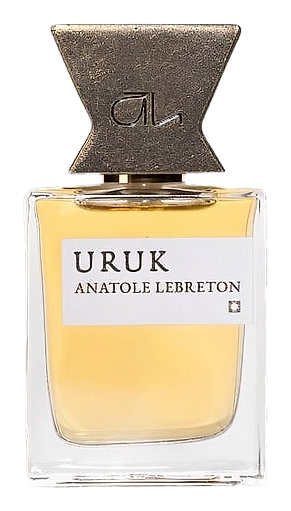
Uruk takes its name from the ancient Mesopotamian city, birthplace of writing, five thousand years ago. Anatole Lebreton pulled from that archive. The Artefacts collection captures moments in time, and Uruk channels Mesopotamian antiquity: incense drifting through stone corridors, the weight of civilization. The official description makes the intent clear: a woody, leathery, animalic raw material fundamental to amber accords, cistus labdanum is here treated without mercy to magnify its dark, burning side. The phrase treated without mercy defines the approach. No softening. No apology.
The perfumer's decision to treat labdanum without mercy is what makes Uruk distinctive. Labdanum appears in countless fragrances, usually tamed, rounded, made palatable. Anatole Lebreton went the other direction, amplifying its dark, burning qualities until the material itself becomes the statement. The Artefacts collection draws from historical archives, and Uruk channels Mesopotamian antiquity: incense drifting through stone corridors, the weight of civilization. This is smoky, animalic, a fragrance that speaks to ancient ritual rather than everyday wear.
The evolution
The opening hits bitter and smoky, frankincense and labdanum dominate, with orange lending a brief flash of citrus. What replaces it is denser, with an animalic warmth underneath that doesn't ask permission. The heart deepens as nutmeg introduces warmth, and the frankincense takes on a sacred quality, like something from a ritual. The labdanum remains present throughout, assertive and unapologetic. The drydown settles into something dense and warm, labdanum and benzoin creating a lingering presence that clings close to skin.
Cultural impact
Part of the Artefacts collection, Uruk channels Mesopotamian antiquity, specifically the resonance of ancient civilization. Community response has been enthusiastic, with descriptors like wet cave and masculine highlighting its dense, smoky character. Several reviewers compare it favorably to Meo Fusciuni's Varanasi, suggesting comparable depth. The fragrance appeals to those who gravitate toward bold, resinous compositions that demand attention.