
The Story
Why it exists.
The beginning
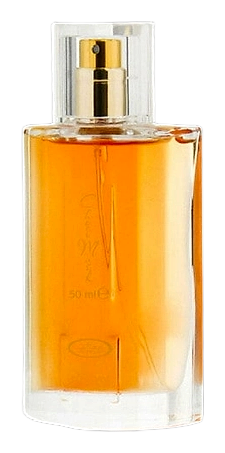
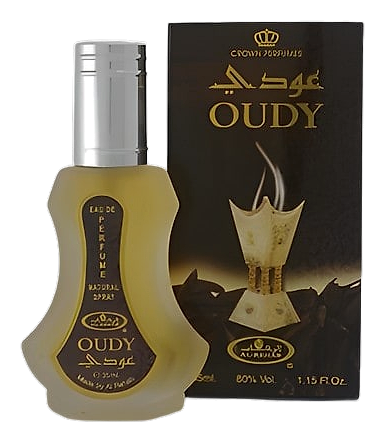
Al Rehab built Oudy from a single conviction: oud shouldn't cost a fortune to experience. The house, founded in Jeddah in 1975, spent decades earning trust through accessible oriental oils and attars. Oudy is that philosophy distilled into spray form, quality materials without the markup. The name says it all. Nothing elaborate, nothing performative. Just agarwood at the center, held by tobacco, lifted by neroli, grounded by broom. The brief was simple: make oud you can wear, not just admire from across a room.
What makes the structure work is the repetition of oud across both heart and base. Most fragrances use agarwood once, as a punctuation mark. Here, it's the entire sentence, arriving in the opening minutes, deepening through the heart, then settling into a quiet final chapter as the broom root draws it toward earth. The costus is the surprise: a hairy-stemmed plant material that carries an animal, almost musky warmth beneath its hairy exterior. White musk softens the landing without sweetening it. Neroli does what it always does, threads citrus blossom through heavier materials without diminishing them. The result is oud that breathes instead of suffocates.
The evolution
The opening is quiet. Costus and white musk arrive close to the skin, almost intimate, like a second layer you forgot you applied. No announcement. Then the oud takes its time asserting itself, warm and resinous, as the tobacco builds slowly in the background. Dry, slightly smoky, never harsh. Neroli appears somewhere in the middle act, a flicker of sweet blossom cutting through the density. By hour three, the structure settles. The broom root keeps things earthy, grounded. The oud fades last, close and personal, not a room-filler at this point, just warmth on skin. Eight hours in, there's still something there. Not projecting. Just present.
Cultural impact
Al Rehab occupies a particular space in fragrance culture: the house that introduced oud to people who couldn't afford oud. Oudy continues that mission. Wearers describe it as the scent of someone who walks into a room and doesn't need to announce themselves. It sits comfortably alongside far more expensive oud compositions, not because it imitates them, but because it simply doesn't care about the comparison. The value-for-money rating tells the story: quality materials, honest construction, no pretension.