
The Story
Why it exists.
The beginning
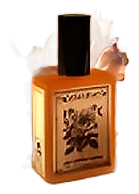
Cassis de la Forêt emerged from a specific desire: to capture the boreal forest as it actually smells, not as a scented candle imagines it. Sharra Lamoureaux built the composition around a precise botanical map, wild berries and stone fruit at the opening, conifers throughout. The French name translates directly to "blackcurrant of the forest," and the fragrance wears that literalness like a badge. It's not poetic metaphor. It's a field guide written in scent.
The note structure is unusual: fruit sitting atop conifer, sweetness threaded through evergreen resin. That combination could go synthetic fast. Here, it holds because the berries are wild, tart, slightly feral, not the cultivated blackcurrant of a preserve. Combined with calamus root's peppery greenness and the layered conifer backbone, the composition reads as a specific place, not a general vibe. That's rare. That's the move.
The evolution
The opening arrives bright and acidic, wild blackcurrant, elderberry, the kind of tartness that makes your mouth pucker like wine. Beneath it, a green note prickles: calamus root, the spruce asserting itself before the berries fully arrive. Then the forest takes over. Pine and jackpine cut sharp through the heart, balsam fir adding depth, tamarack lending its dry dusty quality. The berries begin to recede, but the forest floor emerges, cedar, larch, the earthy bitter backbone of bark and resin. By the drydown, you've moved from canopy to ground. The fruit is memory. The evergreen is home.
Cultural impact
Cassis de la Forêt arrived during a period when indie perfumery was actively redefining what forest fragrances could be. While mainstream releases leaned into predictable cedar-sandalwood bases and fresh-clean marketing, Alkemia's 2019 composition offered a different proposition: a dense, specific boreal landscape rendered in wild berries and evergreen resin. The fragrance resonated with a growing audience seeking scent experiences that felt location-specific rather than generic. Its limited edition status added scarcity-driven appeal, making it a collector target within niche fragrance circles.