The Story
Why it exists.
The beginning
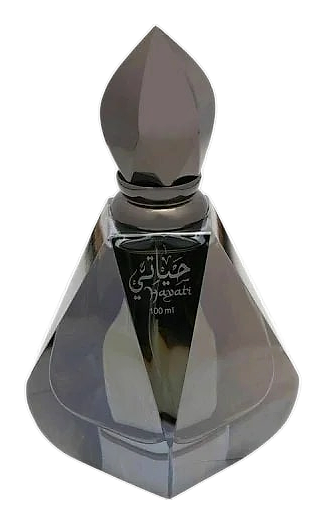
Hayati means "my life" in Arabic, a name that sounds like an endearment and lands like a statement. Al Haramain commissioned perfumer Christian Carbonnel to build a fragrance around an idea rather than a place or a memory. The brief was open: make something that feels personal, not performative. Carbonnel's response was to strip away the usual Oriental complexity, the heavy spices, the aggressive woods, and replace it with something that works more like a second skin. The musk-heavy pyramid wasn't a limitation. It was the point. When everything centers on one material, the quality of that material and the precision of its placement become the entire composition.
What makes Hayati interesting isn't the individual notes, musk, ambergris, sugar, rose, oud, but how Carbonnel uses repetition to create coherence. The musk appears in every phase, but it wears differently each time: bright and clean in the opening, softened by sugar and rose in the heart, grounded by oud in the base. This isn't a pyramid where notes hand off like baton passes. It's more like a single thread that changes color as it moves through different light. The ambergris adds a marine, slightly animalic quality that keeps the sweetness honest rather than syrupy. The oud doesn't dominate; it deepens.
The evolution
The opening arrives clean, ambergris and musk doing that thing where salt and warmth feel almost cool. No sharp edges, no citrus to announce itself. For the first thirty minutes, it's intimate, close to the skin, the kind of scent you catch yourself rather than one that catches others. Then the sugar surfaces, and the rose tiptoes in behind it. Not a dramatic shift, more like a room that gets warmer when the sun moves past the window. The sweetness doesn't overwhelm; it softens the edges the ambergris left behind. By the second hour, the oud begins to assert itself, subtle at first, then more present as the musk base anchors everything. The drydown is where this fragrance earns its keep: six to eight hours on most skin, closer to a full day on fabric. The next morning, there's a faint warmth left on a collar or a scarf, not projecting, but there.
Cultural impact
Hayati sits comfortably in a growing category of Middle Eastern fragrances that prioritize wearability over statement. Where regional perfumery once meant loud ouds and aggressive sillage, compositions like this one show a shift toward intimacy, scents that reward the wearer rather than the room. It's the kind of fragrance that doesn't need to be explained or defended. It simply works.
The House
Al Haramain