
The Story
Why it exists.
The beginning
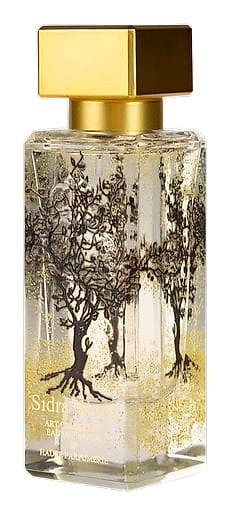
Quentin Bisch designed Sidra Wood around a single idea: warmth that becomes part of you. Not warmth that announces itself, but warmth that arrives quietly and stays. The name references the sidra tree, a landmark presence in Arabian landscapes, and the wood that carries its memory long after the leaves are gone. Bisch worked with that metaphor, building a fragrance that starts bright and gradually becomes something worn, familiar, intimate. This is not a perfume that competes with a room. It's a perfume that competes with your own skin chemistry.
What makes the structure interesting is the hand-off between phases. The opening is all saffron and geranium, aromatic, almost medicinal in its sharpness. That geranium is the quiet workhorse here: it keeps the saffron from becoming too sweet, too exotic, too obviously oriental. When the leather arrives in the heart, it arrives not as a dominant note but as a settling force. The rose doesn't fight it. Labdanum adds a sticky, balsamic warmth that makes the leather read as worn, not harsh. By the time the base arrives, the composition has shifted from something bright to something grounded. The Akigalawood provides a clean, modern woodiness that doesn't muddy the finish.
The evolution
The opening hits fast, saffron's metallic brightness followed immediately by geranium's green cool. That first twenty minutes is the fragrance at its most assertive, its most present. The geranium does the interesting work here: it keeps the saffron from going full oriental, keeps the whole thing from becoming too heavy too soon. Around the thirty-minute mark, the leather arrives. Not the harsh, astringent leather of certain masculine fragrances, something softer, warmed by rose and labdanum. The transition is smooth. The heart doesn't replace the opening so much as absorb it. By hour two, the composition has settled into something warmer. The vanilla in the base begins to surface, but it doesn't behave the way vanilla usually behaves, here it's drier, almost resinous, threaded through with Akigalawood's clean woodiness. The drydown lasts. On skin, expect the full pyramid to hold for eight to ten hours. On fabric, even longer. The next morning, there's a quiet wood-vanilla warmth that remains.
Cultural impact
Sidra Wood occupies a specific space in the contemporary oriental conversation: it's woody without being smoky, sweet without being cloying, and warm without being heavy. The leather-rose combination is not new, but the execution, restrained, modern, built around clean woods rather than traditional oud, sets it apart from both Gulf regional releases and Western oriental flankers. Wearers describe it as the kind of fragrance that becomes part of an outfit rather than competing with it.