
The Story
Why it exists.
The beginning
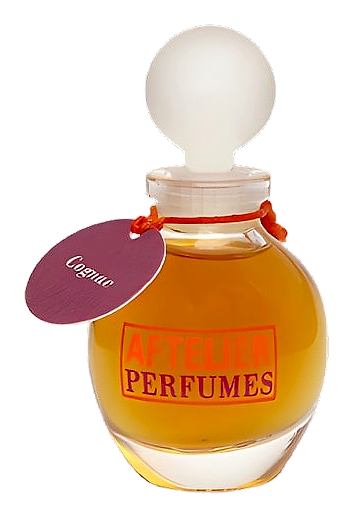
Mandy Aftel built Cognac in 2007 as part of her ongoing exploration of natural materials, and a small act of defiance against what a name implies. Cognac essential oil, she noted in her own materials, is clean, light, boozy and very fruity. That last word, fruity, became the compass for the entire composition. Rather than reach for the expected heaviness of aged spirits, Aftel leaned into the brightness the material already carried. The result is a fragrance that earns its name sideways, through spirit rather than replication.
What makes Cognac unusual is its structural contradiction: a boozy note paired with an olive absolute, one of perfumery's more astringent, challenging materials. The cognac doesn't arrive as amber or syrup. It arrives green. This inversion, using a spirit note as a lifting element rather than a base, is what separates Aftelier's approach from conventional gourmand construction. The raspberry adds a soft fruitiness that could have gone sweet; the ginger keeps it upright. The olive, present throughout, threads bitter botanical through what might otherwise have been a straightforward fruity-spicy composition.
The evolution
The opening announces itself quickly, ginger's clean heat followed immediately by blood orange's tart brightness. This is not a slow build. The first twenty minutes are the loudest, the most citrus-forward, the most surprising given the name. Then something shifts. The olive surfaces, unexpected, turning the composition green and almost savory. The cognac, what little arrives, comes in quiet, more memory than statement. What lingers is a soft, dry warmth with a bitter tail. On fabric, the scent holds for hours. On skin, the longevity varies, but the drydown, that late-stage olive-and-something-behind-it, can persist well past the point you'd stopped paying attention.
Cultural impact
Cognac occupies an unusual position in Aftelier's catalogue: a fragrance that invites misinterpretation through its name, then gently corrects. The natural-perfumery community has noted its deceptive quality, more olive than spirit, more green than amber. For those drawn to Aftelier's philosophy of honest, traceable materials, the fragrance represents a case study in how a single named ingredient can be honored through inversion rather than replication.