
The Story
Why it exists.
The beginning
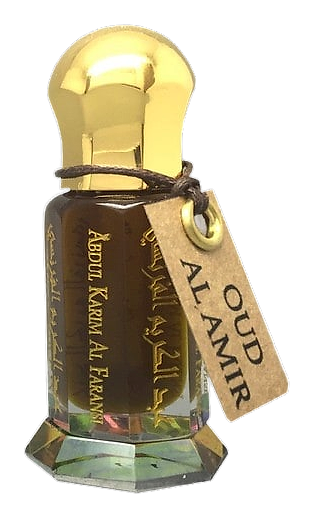
Oud Al Amir landed in 2014. The name translates to something like 'The Prince's Oud', and that ambition is baked in. This wasn't a safe entry. It was a statement: a Cambodian oud as the structural core, held together by honey and caramel. The sweetness was meant to provide contrast to the darkness, creating something with presence and complexity. Cambodian oud carries a particular intensity on its own, and this composition works to frame that intensity within a warmer, more inviting structure. The result feels neither purely traditional nor entirely modern in its approach. The 2014 launch marked the introduction of a fragrance that sought to offer something bold, something that would announce itself clearly without requiring the wearer to negotiate its more challenging aspects.
What makes the pyramid unusual is the work that honey and caramel do in the composition. They don't smother the oud's earthiness. They slow the volatility, creating a longer arc where the oud's mineral, almost medicinal quality has room to develop rather than detonate and disappear. The caramel weaves through the composition, providing a translucent sweetness that never overwhelms but allows the earthy character to remain present. The dried fruits in the base add a fermented, slightly wine-like depth.
The evolution
The opening is sweet and thick, caramel over dark wood, almost like the scent of a warm kitchen at night. The honey announces itself early but doesn't dominate. It tempers. The green notes arrive, not fresh, but herbal, grounding the sweetness before it can turn cloying. They add an earthy counterpoint that prevents the whole composition from feeling overly dessert-like. The drydown is where Cambodian oud takes full command. Its resinous, slightly smoky depth settles into skin and stays for a considerable time. The next morning there's a trace of that mineral wood on fabric, not quite animalic, not quite sweet. Just present. The projection is strong in the first few hours, then settles closer to the skin as the day progresses. On fabric, the scent lingers well into the following day, slowly fading but never fully disappearing.
Cultural impact
Oud Al Amir occupies a specific space in the regional niche landscape: dark enough to satisfy collectors who know their Cambodian from their Assam, while remaining approachable for those exploring beyond mainstream offerings. It arrived in 2014 and remains one of its most discussed releases, not for novelty, but for the way it balances boldness with restraint. The composition demonstrates a particular approach to combining sweet and dark elements, one that has influenced how subsequent releases in the house are perceived and discussed among enthusiasts.