The Story
Why it exists.
The beginning
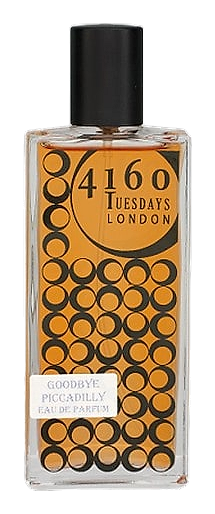
Goodbye Piccadilly began as a commission. Sarah McCartney created it for the London Transport Museum's Friday Late event in May 2014, a talk about the perfumes women would have worn at the start of World War One, when they crossed into jobs that had always belonged to men. Trams, buses, factories. The work that kept things running while the men were gone. McCartney researched the materials used in 1914 and then, as she put it, couldn't resist making a small batch. The original inspiration was personal: her Great Aunt Hilda had worked on the Middlesbrough trams while Uncle Percy sat in a prisoner of war camp. The result smelled exactly like her aunt's living room when McCartney was a child. It went down so well at the museum event that she decided to make more. The official line, a scent for Suffragettes, stuck. But the real origin is more intimate: one family's history, worn on skin that didn't ask permission to smell good.
What makes this composition unusual is its materials. Violet and vanilla were relatively new in perfumery in 1914, and crucially, they were synthetic. Ionones gave violets their powdery sweetness without bankrupting a working woman. Vanillin did the same for vanilla. These were democratizing molecules, the first wave of modern perfumery reaching beyond the wealthy. McCartney didn't just evoke an era, she used the actual palette. Lavender and patchouli are the older materials, the traditional backbone. Iso butyl quinoline, combined with patchouli, created the first Russian leather fragrances.
The evolution
Lavender opens the door. Bright, clean, a little astringent, the smell of something freshly washed and laid out to dry. This phase lasts maybe forty-five minutes before the violet takes over, and it's not a gentle handover. The powdery sweetness arrives with conviction, that ionone-driven floral that used to mean face powder and paper Sachets. It's nostalgic without being quaint. The leather doesn't announce itself. It accumulates quietly under the violet, giving the powdery heart a weight it wouldn't otherwise have. Then, somewhere in the third or fourth hour, the vanilla surfaces, warm, slightly sweet, the kind of thing that stays close to skin. Patchouli is the floor throughout, earthy and persistent, the note that keeps everything from floating away. On fabric, Goodbye Piccadilly lingers for days. The lavender fades first, then the violet, but the vanilla-patchouli base clings like a smell that's been worn into the weave. The longevity holds around six to eight hours on most skin, a working day, appropriately.
Cultural impact
Goodbye Piccadilly does what indie perfumery does best: it tells a story no one else bothered to tell. Commissioned for the London Transport Museum's WWI women workers event, it occupies a genuine gap, a fragrance with historical specificity, built from materials that meant something to the women it honors. The suffragette connection gives it a cultural anchor that transcends typical niche positioning. It won't be for everyone, and that's part of the point.