
The Story
Why it exists.
The beginning
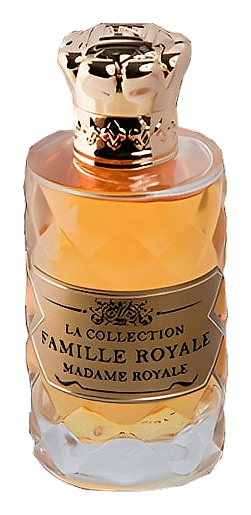
Madame Royale takes its name from Marie-Thérèse Charlotte de France, the eldest daughter of Louis XVI, imprisoned during the Revolution yet described by Napoleon himself as the only man in the Bourbon family. Her resilience during that darkest chapter became the spirit that the fragrance embodies. Neroli, mandarin, and lemon arrive in quick succession, the sound of a door opening onto a bright morning. But jasmine and cedar arrive next, and the light they carry is warmer. Less naive. The kind of composure that has survived something and came out smelling like flowers anyway. That's the Madame Royale paradox: named after a princess who never got to be one, composed for women who find power in restraint.
The pyramid is simple. Almost too simple, three top notes, two heart notes, two base notes. Most modern fragrances bloat to eight or ten. Madame Royale doesn't need to. The structure works because the proportions are right, not because the list is long. What makes it interesting is the cedar. Cedar appears in men's fragrances constantly, dry, pencil-shavings, barbershop. In Madame Royale, cedar softens. It sits beside jasmine rather than oakmoss or vetiver, and that changes what it does. Instead of sharpening, it warms. The jasmine doesn't compete, it folds into the wood the way a silk scarf folds into a dark coat. Not camouflage. Harmony. Musk and amber in the base aren't playing defense.
The evolution
The opening is quick. Mandarin and neroli arrive together, bright, citrus, unapologetic in their freshness. Neroli is orange blossom absolute, waxy and floral even in the top, so the lemon doesn't read as cleaning product or kitchen. It reads as garden in morning light. The mandarin adds a rounder, sweeter edge that keeps the whole opening from going sharp. Shortly after, the jasmine announces itself. Not a shock, more like the door to a garden opening. The cedar is already there, warm and dry, and the jasmine folds into it like someone settling into a chair they've sat in before. This is the heart of Madame Royale: floral and woody, neither one dominating, both present and polite. The drydown is where it earns the name. Musk and amber create something that isn't quite a skin scent and isn't quite a perfume anymore, more like the warmth of a room after everyone has left.
Cultural impact
Madame Royale strikes a careful balance: accessible enough for daily wear, composed enough to reward attention. Its above-average performance keeps it in regular rotation rather than reserved for special occasions. The fragrance invites those who appreciate nuanced, understated elegance. It speaks to wearers who find power in restraint and reward in close attention.