Paolo Cerizza
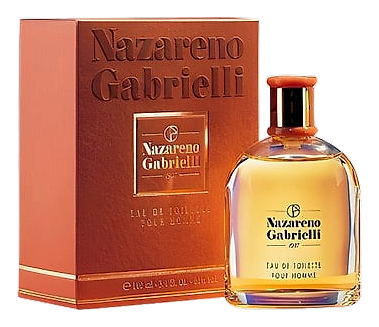
Paolo Cerizza arrived in 1960 in San Remo, a coastal town where the Mediterranean air itself seemed saturated with fragrance. His father, Aurelio Cerizza, had already established Cerizza 1946 in Milan three years prior, building a business around importing raw materials from France and creating formulas that earned him recognition as an industry pioneer. Paolo did not choose perfumery so much as absorb it, growing up surrounded by essential oils and the precise rituals of formulation. At Atelier Fragranze Milano, he now holds the title of most experienced perfumer on the team, guiding olfactory exploration alongside colleague Lorenzo Orlandi Berti during the studio's intensive smelling sessions. His work on Acqua di Portofino introduced a particular vision of Italian elegance to a wider audience, though Cerizza remains deliberately understated about his achievements. The man behind the formulas prefers to let the compositions speak, a stance that has earned him quiet respect among those who follow Italian niche perfumery closely.
The hits
Notable creations




The signature
How Paolo composes
Italian sunshine runs through Cerizza's work, though never in a predictable way. He gravitates toward fresh materials with an almost architectural precision, building compositions that feel clean but never sparse. Citrus, marine notes, and Mediterranean botanicals appear frequently, reflecting both his Ligurian origins and a broader Italian sensibility that prizes natural elegance over aggressive statement. He has a particular affinity for balancing crisp opening notes against richer heart elements, creating fragrances that breathe and evolve over hours on skin. His technical foundation, inherited partly from the family tradition and honed through decades of practice, allows him to handle delicate natural materials with care while achieving remarkable longevity in the final work.
Philosophy
What drives Paolo
Cerizza speaks plainly about what he has learned over decades: experience is not a detail. It is the foundation. This conviction shapes everything in his approach. He treats perfumery as both craft and conversation with tradition, drawing on the rigorous discipline his father modeled while maintaining room for genuine artistic instinct. His formulas seek clarity rather than complexity for its own sake, and he approaches each new project as an opportunity to balance technical mastery with whatever unexpected direction a material might suggest. The studio environment he helps create at Atelier Fragranze Milano reflects this philosophy, built around deep focus and ongoing olfactory exploration rather than rushed results.
In the same league