Jasmine Honey
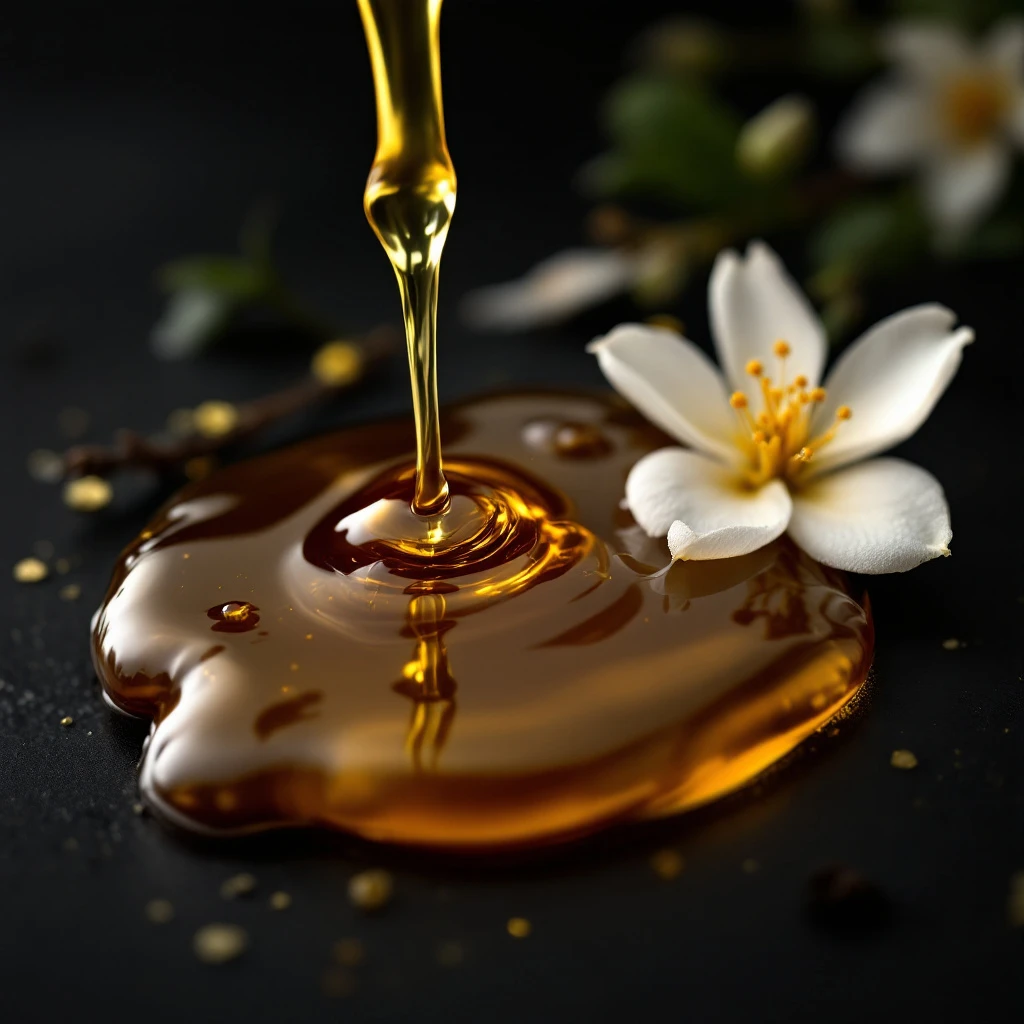
Jasmine Honey marries the narcotic floralcy of night-blooming jasmine with golden, ambery sweetness. This warm accord captures the moment blossoms release their scent into warm evening air, mingling with the rich depth of nectar gathered at dusk.
Character
How it smells
Warm floral sweetness with sensual depth.
It takes 10,000 jasmine blossoms to yield a single milliliter of absolute, making this note among the most labor-intensive in perfumery.

Origin
India
Jasmine has perfumed human civilization since its earliest days. Ancient cultures across Asia and the Middle East employed jasmine in sacred rituals, cosmetics, and medicinal preparations. The Moors carried jasmine to Spain in the 1600s, from where it spread rapidly through Italy to France, where Grasse eventually became its spiritual home.
Traditional perfumery centers in Tamil Nadu once consumed roughly 5% of the region's total flower harvest. The jasmine-honey pairing itself emerged naturally: night-blooming jasmine releases its most intense fragrance after sunset, precisely when nocturnal pollinators and honey-gathering insects become active. Ancient perfumers observed this natural alliance and began intentionally combining floral and honeyed materials.
The accord represents a meeting of two of perfumery's oldest materials, each with millennia of human use behind them, now united in a single olfactory gesture.
Wears it best
Fragrances featuring Jasmine Honey
Brands
Brands known for Jasmine Honey
Good to know
Questions, answered
The essentials on Jasmine Honey in perfumery: how it smells, where it comes from, and how it behaves on skin.
What does Jasmine Honey smell like?
Jasmine Honey opens with heady, narcotic jasmine blossom before yielding to warm, golden honey sweetness. The combination creates a sensual, slightly animalic floral with syrupy depth and lingering warmth on the skin.
Is Jasmine Honey a natural or synthetic ingredient?
Most Jasmine Honey accords combine natural jasmine absolute with honey-derived materials or reconstructed synthetic molecules. Fully natural versions exist but remain rare due to the cost and complexity of production.
Which jasmine species are used for this note?
Jasminum officinale and Jasminum sambac provide the primary floral character. Jasminum auriculatum, native to India, contributes additional rich, spicy sweetness that enhances the honeyed quality.
Where does jasmine for perfumery originate?
Egypt, India, Morocco, and France produce most of the world's perfumery jasmine. Egypt's jasmine often carries particularly pronounced honeyed notes, making it ideal for this accord.
How long has jasmine been used in perfumery?
Jasmine has perfumed human civilization since ancient times. Asian and Middle Eastern civilizations employed it in sacred rituals and cosmetics for thousands of years before it reached European perfumery in the 1600s.
What fragrance families pair well with Jasmine Honey?
Oriental and amber fragrances benefit most from Jasmine Honey's warm depth. Floral and chypre compositions also welcome its sensual sweetness as a grounding base note.
Does Jasmine Honey differ from regular jasmine?
Yes. Regular jasmine emphasizes indolic, green floral facets. Jasmine Honey adds golden, ambery honey tones that soften jasmine's intensity and add syrupy sweetness and slight fermentation notes.
What extraction method creates jasmine absolute?
Solvent extraction yields jasmine concrete from fresh petals, which is then processed into absolute using alcohol. This method captures more aromatic material than steam distillation, which works better for roots and woody parts.