Frangipani Nectar
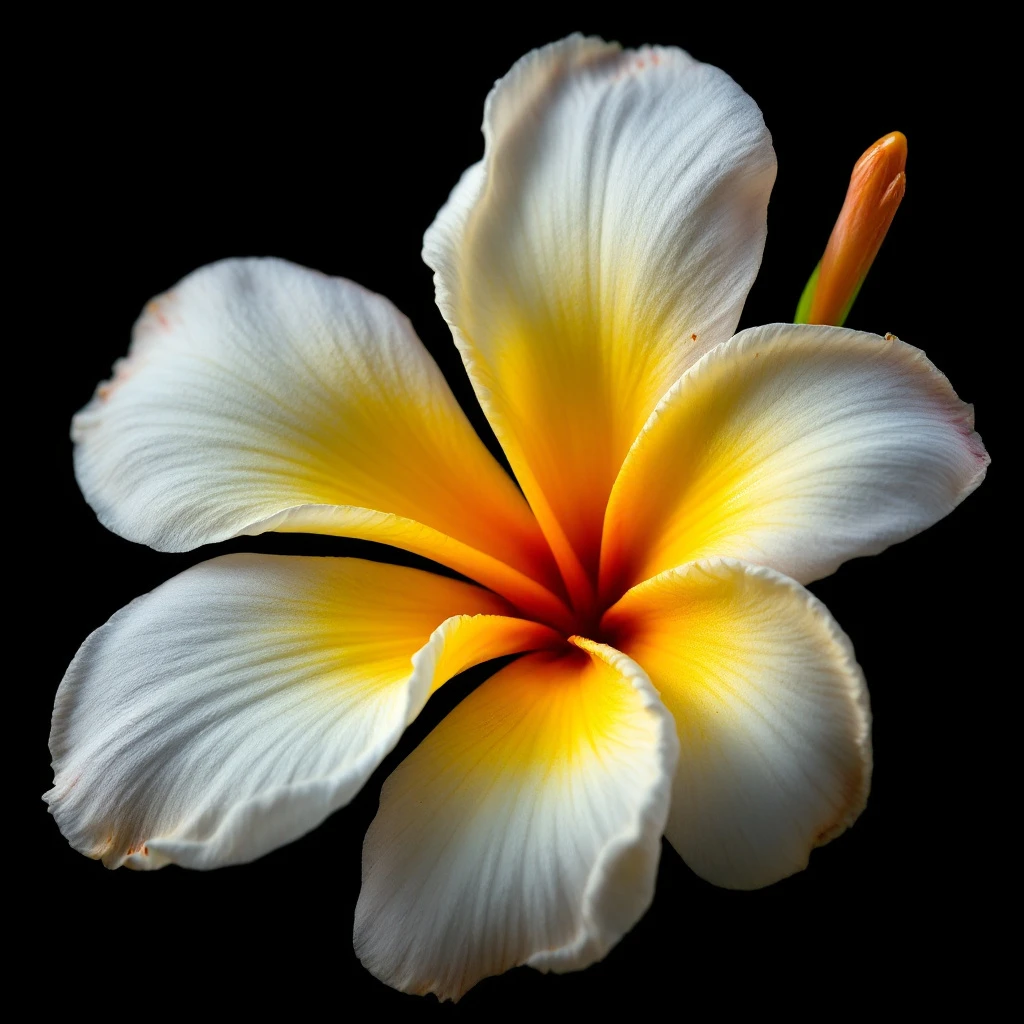
Tropical sweetness, creamy blooms, and sun-warmed petals. Frangipani nectar captures the intoxicating essence of paradise in its most concentrated form.
Character
How it smells
Solar tropical warmth distilled to pure floral essence.
One kilogram of frangipani absolute requires roughly 3.5 tonnes of handpicked blossoms to produce.
Pairs beautifully with
Origin
Mexico
The name frangipani carries centuries of European history before it ever described a tropical flower. In 16th-century Italy, Marquis Muzio Frangipani developed an almond-scented glove treatment that became all the rage among Roman nobility. His perfume combined bitter almonds with civet, musk, and orris root to mask the unpleasant odor of leather.
When French explorers encountered Plumeria in the Caribbean during the 1700s, the flower reminded them so strongly of the Italian perfume that Carl Linnaeus renamed the tropical plant Plumeria frangipani. The flower itself originates from Central America and the Caribbean, where indigenous cultures associated it with immortality and spiritual transcendence. Spanish missionaries later carried the plant to the Philippines, where it became woven into Buddhist and Hindu funeral traditions across Asia.
By the Victorian era, frangipani had become a symbol of elegance in European hothouses. Natural frangipani absolute remained rare in perfumery until the 20th century, when extraction techniques improved enough to capture its elusive scent consistently. Today, the ingredient carries a legacy spanning Italian Renaissance perfumery, Caribbean botany, and Asian spiritual practice.
Wears it best
Fragrances featuring Frangipani Nectar
Brands
Brands known for Frangipani Nectar
Good to know
Questions, answered
The essentials on Frangipani Nectar in perfumery: how it smells, where it comes from, and how it behaves on skin.
What does frangipani nectar smell like?
Frangipani nectar presents a lush tropical sweetness balanced by creamy, milky undertones. The scent evolves through phases of sunny floral warmth, coconut-like lactones, and a subtle green freshness reminiscent of crushed leaves.
Why is frangipani nectar considered rare in perfumery?
Natural frangipani absolute requires enormous quantities of delicate blossoms to produce minimal amounts of absolute. Thousands of freshly picked flowers yield only small quantities, making genuine frangipani absolute one of the more precious natural ingredients in fine fragrance.
How is frangipani nectar extracted from the flower?
Producers use solvent extraction rather than steam distillation, as heat damages frangipani's delicate aroma compounds. Fresh petals are soaked in food-grade solvent, then processed to create a concentrated absolute. This method better preserves the flower's complex scent profile.
Can synthetic alternatives replace natural frangipani nectar?
Fragrance chemists have developed synthetic recreations of frangipani's scent profile, but capturing the full complexity of the natural absolute remains challenging. Natural frangipani absolute remains prized in high-end perfumery for its authentic depth.
Where does the name frangipani originate?
The name honors Marquis Muzio Frangipani, who created an almond-scented perfume for leather gloves in 16th-century Italy. When tropical Plumeria flowers arrived in Europe, their scent reminded perfumers so strongly of his perfume that Linnaeus named the plant Plumeria frangipani.
In which types of fragrances does frangipani nectar appear?
Frangipani absolute features prominently in tropical, floral, and exotic fragrance families. Perfumers use it to lend sunny warmth and creamy floralcy to summer fragrances, beach-themed scents, and white floral compositions.
What growing conditions produce the most aromatic frangipani flowers?
Warm, frost-free climates with abundant sunshine yield the most fragrant blossoms. The plant thrives in temperatures between 18 and 27 degrees Celsius and produces its most intense scent during hot, humid weather.
What cultural significance does frangipani hold beyond perfumery?
Frangipani carries deep symbolic meaning across multiple cultures. In Hindu and Buddhist traditions, it represents immortality and the soul's transcendence. In Latin America, the flower appears at funerals and altars. Hawaiian traditions use the blossoms in leis and ceremonial garlands.





