

The Story
Why it exists.
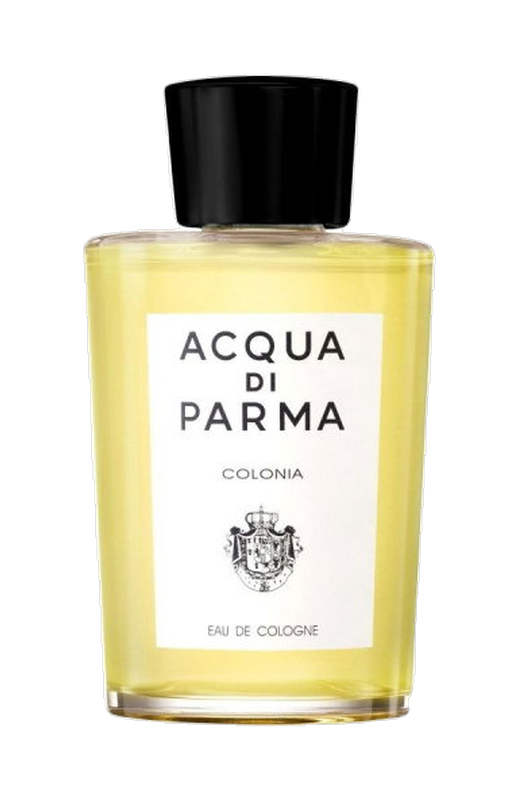
In 1916, a small factory in Parma, Italy produced its first fragrance. That scent was Colonia. What began as perfume for gentlemen's handkerchiefs became a defining symbol of Italian chic, worn by Cary Grant and Ava Gardner in the 1950s, later joined by Audrey Hepburn. From humble roots, Acqua di Parma grew into a global name. But Colonia remains the beginning.
If this were a song
Community picks
Estate
João Gilberto
The Beginning
In 1916, a small factory in Parma, Italy produced its first fragrance. That scent was Colonia. What began as perfume for gentlemen's handkerchiefs became a defining symbol of Italian chic, worn by Cary Grant and Ava Gardner in the 1950s, later joined by Audrey Hepburn. From humble roots, Acqua di Parma grew into a global name. But Colonia remains the beginning.
Colonia's structure is deceptively simple: citrus, lavender, rose, woods. What makes it work is proportion. The citrus doesn't shout,it sparkles. The lavender doesn't dominate,it softens. The woods don't linger aggressively,they settle. This restraint is what separates classic cologne from modern attempts at the same effect.
The Evolution
The opening hits bright and clean, Sicilian citrus with lemon verbena, a Tuesday morning confidence that doesn't need to shout. Within the first hour, Bulgarian rose and jasmine arrive to temper the citrus with something almost powdery-soft. The drydown is where vetiver and sandalwood take over, warm and woody, and that's when people actually lean in. Hours later, a clean skin scent lingers. You smell like yourself, only better.
Cultural Impact
Colonia became a symbol of Italian elegance among Hollywood royalty in the 1930s and 1950s. Cary Grant, Ava Gardner, and Audrey Hepburn were among its admirers. The fragrance helped define what Italian masculine sophistication looked like to the world,restrained, confident, never vulgar. Still in continuous production today, it remains a benchmark for classic cologne structure.
The House
Italy · Est. 1916
Baron Carlo Magnani created Acqua di Parma in 1916 as his own signature scent. What began as one fragrance has become synonymous with Italian sophistication. Colonia, the house's founding creation, holds the distinction of being the first true Italian Eau de Cologne, and it remains unchanged today. Over a century later, the house still captures the essence of la dolce vita, pairing Mediterranean brightness with an understated luxury that appeals to those who prefer refinement to ostentation.
The Creator
Acqua di Parma House PerfumerFounded in 1916 in Parma, Italy, Acqua di Parma began as a small factory producing perfumes and cosmetics. The creation of Colonia marked the house's entry into fragrance and established its reputation for elegant Italian craftsmanship. The brand grew from local success to international recognition, becoming synonymous with Mediterranean sophistication.
If this were a song
Community picks
The feeling of stepping onto a sun-warmed terrace in Parma. Morning light, nothing to prove. Astringent citrus cutting through the haze, then something softer beneath,lavender drying in the afternoon heat. This is music for people who've stopped trying to be noticed.
Estate
João Gilberto