
The Story
Why it exists.
The beginning
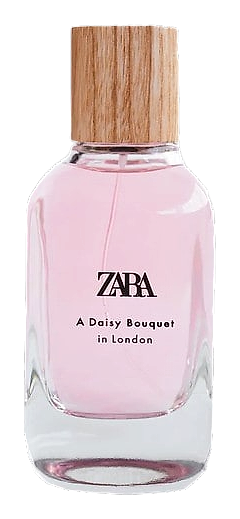
Ane Ayo drew from a very specific corner of London: Columbia Road, the narrow East End street famous for its Sunday flower market. The story she wrote into the fragrance is simple, a couple walking through that street, where the city falls away and only the flowers remain. Car noise, air pollution, the bustle, none of it matters. Just the smell. That quiet romance of flowers cutting through urban noise is exactly what this fragrance translates: the transient, the everyday, the unexpectedly beautiful.
The composition does something interesting in its restraint. Three notes. Not a crowded pyramid, not an explosion of complexity, just bergamot, jasmine, white musk working in quiet agreement. What makes it work is the hand-off: bergamot opens sharp and citrus-bright, giving way to jasmine that arrives warm and lingers longer than expected, before white musk settles into skin like something personal. No fat, no filler. The simplicity is the sophistication.
The evolution
The bergamot hits fast, that immediate spark of citrus that reads like sunlight through a window. Lasts maybe fifteen minutes before the jasmine begins its slow take-over. That's when the scent transforms from something bright and reactive into something with real presence. Jasmine doesn't shout, but it fills the space. The warmth builds against skin. Then, hours later, white musk becomes the only remaining voice, close, intimate, detectable on a collar the next morning if you're lucky.
Cultural impact
A Daisy Bouquet in London carved out a quiet space in the Zara fragrance lineup, not the boldest, not the most experimental, but perhaps the most wearable. The 2020 release arrived during a period when accessible floral fragrances were gaining ground among consumers who wanted quality without the luxury markup. Its discontinuation has only increased its appeal among collectors and those who discovered it late.