The Story
Why it exists.
The beginning
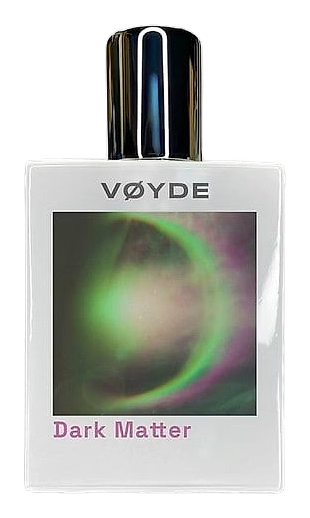
Dark Matter arrived in 2024 from perfumers Miriam Shechet and Macaul Neenan. The composition was conceived as an exercise in gravitational pull, built around density, with materials drawn inward rather than radiating outward. The perfumers started with a question about contrast. Could fruit coexist with char without either winning? Raspberry and birch tar sit on opposite ends of the olfactory spectrum. One is wet and jammy, almost confectionary. The other is dry, burned, and mineral. Pairing them risks producing something either too sweet or too acrid. Shechet and Neenan committed to neither outcome and instead built the composition around the friction itself, using oud at the center to anchor both poles.
Cypriol is a root oil with an earthy, smoky character that bridges wood and leather without belonging to either family. It carries a dry, almost metallic warmth that gives Dark Matter its gravitational core. Birch tar contributes the burned edge, dry and sharp, a material that smells less like smoke and more like the residue of smoke, what remains after the flame has passed. Together, they form a foundation that resists sweetness at every turn. Raspberry in a leather-forward fragrance is unusual.
The evolution
The opening is almost confrontational. Birch tar and cypriol arrive together, dry and charred, with a smoked-vanilla warmth already threading underneath. There is no sparkle, no citrus lift, no airy introduction. Just weight. The materials stack on the skin with an immediacy that demands attention rather than inviting it. Within the first few minutes, the tar dominates, black and mineral, like the smell of something that has burned long past the point of recognition. Then something unexpected surfaces. The raspberry doesn't appear as a bright fruit accord. It comes through as jam, dark and cooked down, pushing through the smoke like embers glowing under ash. It never separates from the smoke. It exists inside it, sweetened by char rather than sugar. The effect is disorienting at first, because the brain expects fruit to register as bright, lifted, refreshing.
Cultural impact
Dark Matter occupies a specific niche in contemporary indie perfumery. It's a scent that treats material weight and conceptual structure as primary concerns, asking wearers to engage with it as a constructed object rather than a casual accessory. The raspberry-smoke tension at its core makes it difficult to categorize, and that difficulty is part of its appeal. It doesn't fit neatly into gourmand, leather, or smoky fragrance categories. It borrows from all three and refuses to commit to any of them.