
The Story
Why it exists.
The beginning
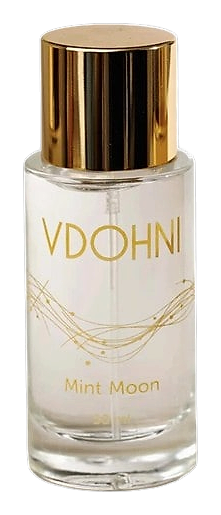
The song plays on a fire escape in a 1961 film. Audrey Hepburn, nowhere to be, no one watching. Just a woman and her shadow and a river that doesn't care. Mint Moon doesn't replicate that scene, it translates it. The stillness. The cool air between two people who don't need to fill it. Mint and green tea and apple blossom in a composition that knows when to be quiet. Polina Kazakova built this for that hour.
What makes Mint Moon interesting is the mint. Not the mint of toothpaste or gum, something colder, more angular. Paired with green tea, it reads medicinal at first spray, then softens into something contemplative. The apple blossom and jasmine keep it from going fully austere. They hold the door open. Musk in the base makes it skin-warm rather than skin-close. The whole structure is transparent in a way that rewards wearing it alone in a quiet room as much as wearing it out into the world.
The evolution
Mint Moon moves in three phases. First: mint and bergamot, bright and almost clinical. Some find this opening sharp for the first two minutes, a flash of something that could go either way. Then the green tea and aquatic notes arrive, and the mint backs off. The composition becomes steam. Airy. White florals drift through without announcing themselves. Finally, the musk settles. Close. Skin-warm. The mint doesn't disappear, it lingers quietly, like a thought you can't quite shake. On most skin types, this holds for 4-6 hours. On fabric, longer. The drydown is where it earns its name.
Cultural impact
Mint Moon sits in the green-aquatic space without trying to compete with the big houses. It's not trying to be the next benchmark fragrance, it's doing something quieter. The independent collector who gravitates to VDOHNI is looking for exactly this: a scent with a reason to exist beyond market positioning.