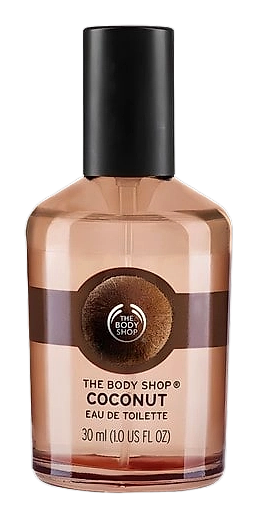

The Story
Why it exists.
The beginning
The Body Shop has built its fragrance identity around a particular kind of honesty, ingredients you can trace to a farmer's hands, not a laboratory formula. Coconut arrived in 2012 as part of a body mist collection that the brand built around accessibility: scents that cost less than a proper perfume but carry the same ethical weight. The idea was straightforward. Take a single, recognizable material, coconut, shea, satsuma, and let it do the work rather than bury it under complexity.
What makes this composition interesting isn't the coconut itself, it's the lactonic quality. That's the creamy, almost buttery undertone that distinguishes real coconut from synthetic versions. Without it, you get flat sweetness. With it, the fragrance reads as natural even though it's formulated for a body mist format, where longevity is structurally harder to achieve than in an oil or EDT concentration.
The evolution
The opening is immediate: a cool, sweet burst that doesn't linger long enough to interrogate. Within five minutes, the coconut settles into something warmer, closer to the skin, less spray-in-the-air and more skin-after-sunshine. The vanilla appears around the twenty-minute mark, a soft counterweight that prevents the whole thing from reading as purely edible. By the end of the second hour, you're getting whispers rather than statements, a faint sweet warmth that fades before the fourth hour on most people, closer to six on well-moisturized skin.
Cultural impact
The Body Shop's body mist line occupies a specific corner of fragrance culture, the one where scent is daily rather than ceremonial. Coconut performs consistently for warm-weather wear and casual daytime use, appealing to people who want something they can reach for without occasion or calculation. It's the fragrance equivalent of wearing the same cotton shirt three days a week: comfortable, honest, and not pretending to be more than it is.