The Story
Why it exists.
The beginning
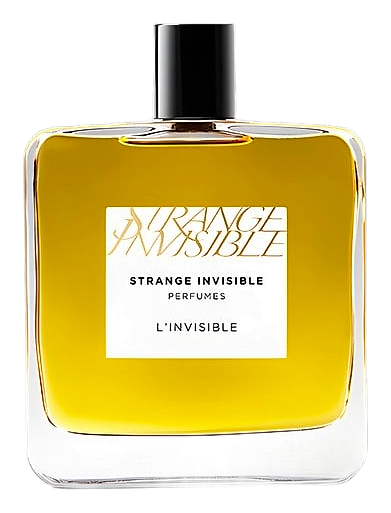
Alexandra Balahoutis spent years looking for something that didn't exist: a fragrance built from pure botanicals that smelled like skin, not like perfume layered on top of it. When she couldn't find it, she made it herself. L'Invisible arrived in 2005 as the first release from Strange Invisible Perfumes, a Venice, California house built on the radical idea that natural ingredients, processed without synthetic shortcuts, could achieve what conventional perfumery couldn't. The name says everything. L'Invisible was designed to be present without announcing itself, to smell like the most beautiful version of the person wearing it.
The transparency in L'Invisible comes not from holding back, but from the nature of the materials themselves. Ylang-ylang at its most translucent, rose that whispers rather than shouts, jasmine held close by the warmth of the skin beneath it. Vanilla and amber act as the bridge, they don't sweeten the composition so much as give the florals somewhere warm to land. Oakmoss is the quiet anchor, lending earthiness and depth without weight. The result is a fragrance that settles into the skin rather than sitting above it, intimate by design, noticeable only to those standing close enough to matter.
The evolution
It opens resinous, almost waxy, the kind of natural scent that reads different on every nose. Within minutes, the flowers breathe brightness into it. Ylang-ylang leads, creamy and tropical, followed by rose and jasmine settling into a quiet hum. A reviewer called it unisex and they're right; the resin and moss undercut any tendency toward sweetness. After the first hour, L'Invisible becomes something else entirely. Vanilla arrives at the skin level, not the air level, warming from underneath while amber and moss hold everything close. The sillage is moderate by design, this isn't a fragrance that announces itself. It's the kind of wear that someone notices three hours in when their head is on your shoulder. By hour five, if you're still paying attention, it's the ghost of something floral and sweet on clean skin.
Cultural impact
L'Invisible arrived in 2005 as an outlier, a women's floral that refused to project, that aimed for intimacy instead of sillage in an era when niche perfumery was still finding its modern voice. The Venice, California house built its entire identity around the radical proposition that natural ingredients, handled with care, could achieve complexity that synthetics couldn't replicate. L'Invisible was the proof of concept. Wearers who found it describe it as the fragrance that made them reconsider what they wanted from perfume, not an accessory, but an extension.