The Story
Why it exists.
The beginning
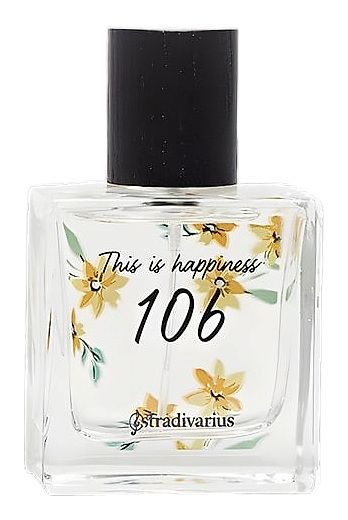
106 This Is Happiness arrived in 2019 as part of Stradivarius's numbered catalogue of fragrances, each one a small composition designed to capture a single word or feeling. Number 106 was assigned the word happiness, and the brief reads simple: something that smells like a good day without trying too hard to prove it. The juice inside is a study in restraint, built on three notes that have been part of perfumery's vocabulary for decades, bergamot, white flowers, and moss, arranged with a light hand. The bergamot opens bright and almost fizzy, the kind of citrus that feels squeezed rather than sprayed, lifting the mood of the air around it without announcing itself too loudly.
The composition works because it doesn't try to be more than three things. Bergamot carries the brightness. White flowers give it a softness without tipping into sweetness. Then moss pulls the whole thing earthward, adding that green-cool undertone that makes a floral feel grown rather than girlish. It's a tight, transparent structure. Every layer has a job, and none of them argue for attention.
The evolution
Bergamot owns the opening, a clean, almost fizzy citrus that feels squeezed rather than sprayed, bright enough to lift the mood of a room but quiet enough not to announce itself. There's a slight bitterness at the edges, more peel than juice, and it carries no sweetness to blunt that brightness. As the hours pass, the white flowers ease in, soft and slightly creamy, softening the citrus without replacing it. The petals feel almost cool against the warmth of the bergamot, lending the composition a gentle contrast that keeps the opening from feeling one-note. The moss settles into the base like a low hum, giving everything underneath a cool, green weight, damp and quiet, like the smell of shaded stone after a short rain. The drydown is where this scent does something unexpected: instead of fading into nothing, it tightens.
Cultural impact
106 This Is Happiness occupies an interesting spot in the fragrance landscape because of how it handles its three-note structure. The composition uses bergamot, white flowers, and moss in a stripped-down arrangement that doesn't lean on sugar or amber or heavy woods to carry it, which gives it a lightness that sets it apart from many of its peers in the accessible price tier. That simplicity is the composition's strength. Rather than building outward with more accords, it stays close to its three ingredients, letting each one take a clear turn at the front of the stage before receding into the background.