The Story
Why it exists.
The beginning
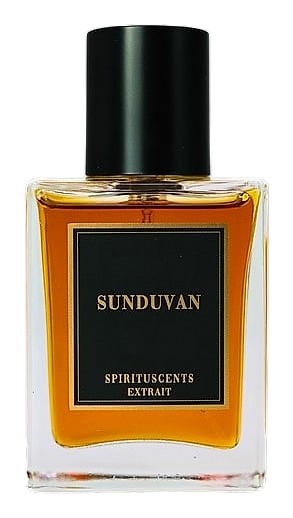
The legend of Huminodun appears in Bornean folklore. A woman who sacrificed herself and became rice, feeding her people through famine. That is what Sunduvan draws from: not a place, not a flower, but an act of transformation for the sake of others. Morris T.H. built the fragrance around that logic. The opening is fermented rice wine, not sweet, not simple, but warm and alive with fermentation's quiet power. That is where the story begins. The fermented note has a viscous quality, almost syrupy, with the quiet depth that comes from slow, controlled transformation. It lingers at the top of the wear, a reminder that what feeds us often comes from something that gave itself over completely.
What makes the composition unusual is the rice bran absolute anchoring the entire structure. It is not a familiar perfumery material, it brings a starchy, slightly sweet depth that behaves differently from most base notes. Pair it with Borneo patchouli, and you get earth without heaviness, warmth without sweetness in the conventional sense. The civet is part of the composition, its animalic quality adding a layer of natural complexity that reads as authentic rather than harsh. The beeswax and honey do not read as decorative.
The evolution
Jiuniang opens first, sweet fermented rice wine, warm and slightly boozy in the way glutinous rice ferments into something almost viscous. Pandanus threads through with its green coconut-adjacent note, keeping things grounded before the florals arrive. Orchid and jasmine absolute take over, dense, absolute-strength blooms that fill the space. Ylang-ylang adds tropical weight. Then the civet appears, not aggressive but present, a counterpoint that keeps the narrative from becoming purely linear. The drydown is patchouli, oakmoss, and beeswax, a warmth that settles close and stays. By the later hours, it is rice bran, benzoin, and musks that feel almost skin-like. The composition settles into its final form.
Cultural impact
Sunduvan's release placed a Borneo-specific myth at the center of a modern fragrance, not as narrative gimmick, but as structural logic. The Kadazan-Dusun legend of Huminodun informed both the material choices and the emotional register. The house worked with regional mythology and regional materials, creating a fragrance that speaks from a specific cultural context rather than drawing from the usual sources of inspiration.