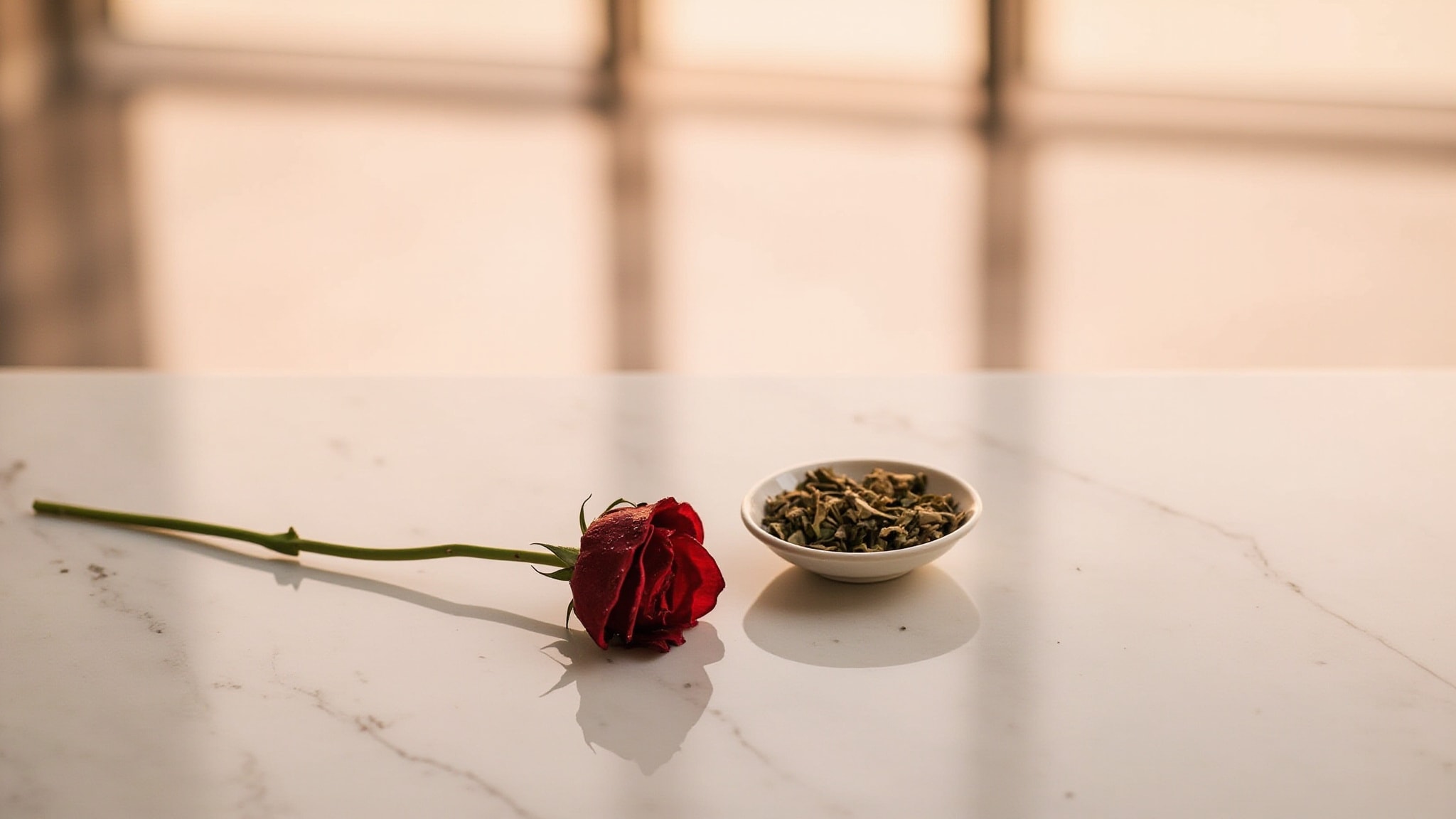
The Story
Why it exists.
The beginning
Bara arrived in 1917 as part of Shiseido's early perfume catalog, a period when the Tokyo-based house was still establishing its presence in the fragrance world. The bottle bore the Japanese name Bara, written with the characters that have long denoted the flower in the language. At a time when Japanese perfumery was developing its sensibility and finding ways to translate floral beauty into bottled form, Bara stood as a focused statement built around a single botanical note. It wasn't the brand's first fragrance, but it distinguished itself through its commitment to a single flower, letting rose take center stage without competing accents.
What makes Bara worth paying attention to is its discipline. A rose-focused composition can go many directions: layered, complex, crowded with supporting notes. Bara reportedly strips that away and keeps the rose front and center, the most common reading verified against available information. Sources list rose as the confirmed note, with the rest of the composition kept minimal. There's an argument that a single-flower focus isn't a shortcut or a simple formula. It's arguably the hardest kind of composition to execute, because every choice has to serve the one note at the heart of it.
The evolution
Bara opens with a bright, dewy rose that reads almost like the first breath of a garden in early light, cool, green at the edges, unmistakably fresh. The flower deepens as the scent warms against skin, settling into a richer sweetness that feels less like crushed petals and more like a bloom still holding its shape under afternoon sun. There's a quiet roundness underneath, the softness of rose deepening into something fuller and more yielding, the kind of floral warmth that suggests petals rather than anything sharper. As the hours pass, the scent settles into a soft, skin-close drydown: warm, faintly floral, the rose now more suggestion than declaration. What lingers is the impression of the flower itself, a trace of something comforting that stays close to the body rather than projecting outward.
Cultural impact
Bara occupies an unusual corner of fragrance history. Released in 1917, it predates many of the later rose-focused compositions that would shape how the genre is understood today, and it commits to rose with a purity that can feel almost contemporary in its single-mindedness. More than a century later, it remains in circulation as a reference for what an unadorned rose can be: no oud layered in, no praline sweetness, no gourmand embellishment, just the flower itself rendered as directly as the form allows.