
The Story
Why it exists.
The beginning
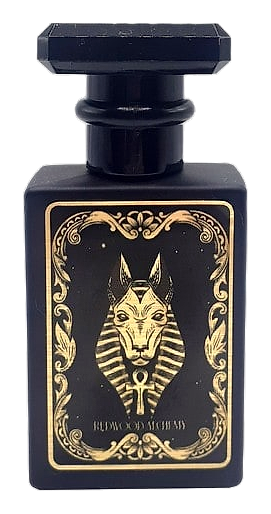
Redwood Alchemy built Anubis from the archaeology of smell. The Egyptian god of the dead lent his name, but the true material came from historical analysis of actual mummification rituals, the unguents, resins, and aromatic compounds documented in real funerary texts. This wasn't inspiration. This was reconstruction. The brand, rooted in the shadow-soaked forests of California's Santa Cruz mountains, has made a practice of taking difficult themes and rendering them hyper-realistic rather than romantic. Blood smells like blood. Grave smells like earth. Anubis smells like what was used to prepare the dead for eternity. That distinction matters.
The note structure reflects this intent with unusual honesty. Conifer and lavender arrive first, not for beauty, but for function. Both have antiseptic, preserving properties that made them common in ancient funerary preparations. Then the heart shifts to papyrus, salt, and rose. Papyrus is desiccated, almost dusty. Salt adds a mineral tang that reads as physical, real. The rose is the only concession to the living world, and it arrives already browning at the edges. This isn't a garden rose. It's a rose pressed in a book found in a tomb.
The evolution
The opening lasts maybe 30 minutes. Conifer clears, lavender settles, and something green remains, like stems pulled from ancient clay pots. The transition into the heart phase is where Anubis gets strange. Papyrus doesn't smell like paper. It smells like the material itself, dry, fibrous, slightly sweet in a way that recalls old bindings. Salt amplifies the effect. The rose reads more as dried petals than fresh blooms. Then frankincense, myrrh, and copal begin their slow combustion. The drydown is where the fragrance earns its name. Warm amber resin sits close to the skin for 4-6 hours, burning slow. Cinnamon arrives late, just enough spice to keep it from feeling somber. On fabric, it lasts into the next day as a faint trace of smoke.
Cultural impact
Anubis arrived in 2021 and immediately divided opinion. Those expecting the usual Egyptian-perfumery tropes, oud, honey, saffron, encountered something stranger. Desiccated papyrus. Salt. Resin dust. The frankincense reads as true smoke rather than decorative warmth. For niche collectors who had been searching for an unguent that smelled like the real thing, this was it. For everyone else, it was an acquired taste that required no apology from the brand. Redwood Alchemy built their following on exactly this kind of specificity, fragrances that earn their names rather than merely borrowing them.