
The Story
Why it exists.
The beginning
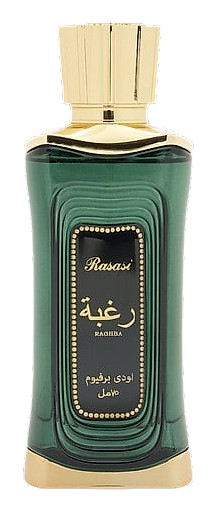
Raghba strips oud down to its barest elements. Where many compositions layer florals or fruits around the central wood, this one goes almost monastic. Amber, oud, musk. That's the conversation. Three notes, and a clear faith that the material can carry the entire weight of the fragrance without ornamentation. Rasasi has long worked in this register, treating oud not as a novelty but as a central pillar of Eastern perfumery. With Raghba, that philosophy finds one of its purest expressions. There's no pretense here, no attempt to dress the wood in borrowed textures. What you smell is what the perfumer intended: a tight composition built on the assumption that oud, handled correctly, is more than enough to anchor a scent. The restraint feels intentional. Every note earns its place.
What's interesting here is the structural choice: three notes in the pyramid, but oud appears in all three layers. It's the first thing you smell, the thing that bridges the heart, and the foundation everything else melts into. That triple placement is the perfumer's thesis. Oud isn't a headline here, it's the whole article. The pyramid reads simply on paper, but the execution is where the craft shows. Amber and musk flank the oud, each pulling a different kind of weight. One adds warmth and a subtle sweetness, the other grounds the composition in something animalic and alive.
The evolution
The opening announces itself without ceremony. Amber and oud together, and there's no citrus or floral buffer to ease you in. The wood is present and resinous, and it asks for your attention in the first few minutes. If oud isn't your territory, you'll know within the first spray. If it is, you'll lean in. The heart is where the oud deepens. What started as surface-level woodiness becomes something richer, more textured, as the amber settles around it. The oud in the middle doesn't change its character so much as reveal more of it, unfolding in layers that reward attention. This phase defines the wearer in any room they walk through, the dominant presence on skin, the scent that sets the tone before you've said a word. The drydown is where the musk earns its keep. As the oud slowly steps back, the white musk rises underneath, soft and skin-like, almost a second epidermis.
Cultural impact
Raghba offers something specific: oud without embellishment, a composition that trusts the material to carry the conversation on its own. In a fragrance landscape where the note often arrives dressed in rose, saffron, fruit, or sweet vanillas, this one stays clean. The wood is the headline, the support, and the closing argument. For anyone seeking oud in a form that doesn't soften it or apologize for it, Raghba presents itself as a direct path to the material. The approach feels confident, almost declarative, as if the perfumer is making a case for what oud can do when it's not asked to share the stage.