The Story
Why it exists.
The beginning
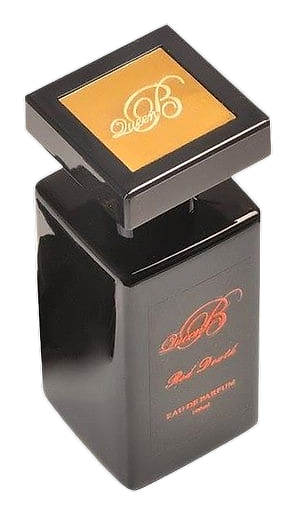
Queen B Perfumes was built on the premise that Arabian perfumery and contemporary Western tastes don't have to be separate conversations. The brand grew into a catalog of editions, each one rooted in that same intersection of tradition and modern wearability. Red Death arrived as a woody, powdery, unapologetically oud-rooted composition, the kind of scent that doesn't introduce itself so much as settle into the room before you notice it's there. The name reads dramatic. The fragrance is not. It's quiet in a way that earns its title, built around jasmine and amber on top, with oud and sandalwood forming the architecture underneath. The jasmine isn't a whisper here.
What makes this composition interesting is how the white florals and the heavier base notes are forced to share the same space. Jasmine and amber open the door, but oud, sandalwood, and musk walk through it and take over the room. The accords tell the story before you smell it: woody, powdery, white floral, oud, musky, amber, warm spicy, animalic. That's not a list. That's a negotiation. The powdery quality softens what the oud sharpens, and the musk gives the whole thing a skin-like warmth that keeps the florals from floating away.
The evolution
The opening belongs to jasmine and amber, and the jasmine isn't shy. It sits on top, slightly indolic, with the amber giving it a golden, resinous weight that almost reads as honeyed before it settles. But the composition doesn't stay a floral for long. The oud arrives quietly, underneath, like a change in the room's temperature, not a sudden statement but a slow pressure shift. Soon the woody notes and sandalwood move to the center, and the jasmine is no longer a solo act. It's being backed by a low, creamy woodiness and a musk that reads more like warm skin than a clean laundry musk. The animalic accord that sits in the base never fully takes over, but it adds a slight rawness to the drydown that keeps the whole composition from going too smooth.
Cultural impact
Red Death fits into Queen B's catalog as one of the more oud-forward woody compositions, a scent that leans fully into the heavier, resinous side of the spectrum without apology. It's not a crowd-pleaser in the citrus-fresh sense. The powdery, animalic edge makes it a fragrance people tend to seek out rather than stumble into, the sort of bottle you reach for when you already know what oud can do and want to see what a particular house does with it. Within Queen B's own range it stands as a quiet statement piece, more about presence than projection, more about texture than trend.