
The Story
Why it exists.
The beginning
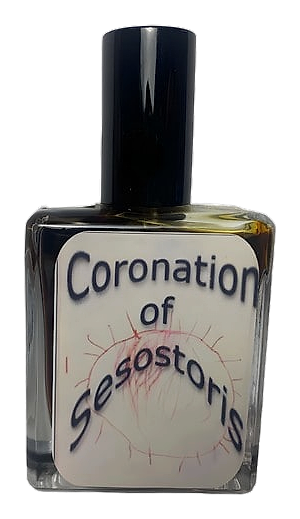
Coronation of Sesostris takes its name from Cy Twombly's 10-part painting cycle, displayed at Gagosian Gallery in New York. The work depicts the solar barge of the Egyptian pharaoh Sesostris mythologized by the sun god Ra, a sequence described as a kind of composition of emotional extremes, rushing between the funereal, the rhapsodic, and the majestic. Fragments of Sappho's poetry appear across the canvases, their bittersweet meditations on desire intensifying the paradox at the work's core. Weston Adam approached the painting as a brief: translate this specific collision of grandeur and grief into scent. The result is not a literal translation of ancient Egypt or solar mythology. It is the olfactory residue of what that painting leaves behind, warmth, smoke, and the sense that something significant just ended.
The immortelle note is the structural surprise. This material, named for the flower that refuses to fade, is rare in Western perfumery outside the Mediterranean and Balkans. Here it doesn't anchor the composition or lend drydown warmth. It opens it. The scent begins in immortelle's honeyed, herbal density and works outward into tobacco, benzoin, and myrrh. This sequencing is unusual: most fragrances that use immortelle treat it as a supporting player in the drydown. Coronation of Sesostris makes it the protagonist, then builds everything around its particular brand of bittersweet persistence.
The evolution
The immortelle arrives first, dense and herbal, honeyed, slightly medicinal, like dried flowers pressed in an old book. Within minutes, tobacco enters. Not the clean, sweet pipe tobacco of most compositions. This is darker, leafier, with a faint animalic edge that keeps it from being pleasant in any conventional way. The wine impression appears here, though calling it a wine accord would overstate the case. What community reviewers describe as a port wine quality, the sweetness, the fermented warmth, the dark fruit, seems to emerge from the combination of immortelle and castoreum more than any actual wine note. The wine impression doesn't last. Within an hour, it dissolves into something older and earthier. The drydown that follows has been described as a cave-like smell, resinous, warm, and human all at once. Castoreum and deer musk anchor everything. These materials are rare in contemporary perfumery. They lend a certain rawness that most modern compositions avoid, and here that rawness is not softened or prettied up. It persists.
Cultural impact
Coronation of Sesostris arrives at a moment when niche perfumery is increasingly positioned as a bridge between visual art and commercial scent. Phronema Perfumes, founded by a multimedia artist, deliberately refuses the conventional perfume brief in favor of narrative composition. This approach reflects a broader shift in how fragrance is consumed and discussed, moving away from pure hedonics toward storytelling and artistic intent. The use of dense natural materials like castoreum and deer musk in an extrait de parfum format signals a return to pre-synthetic perfumery values, offering an alternative to the mass-market preference for clean, safe compositions.