The Story
Why it exists.
The beginning
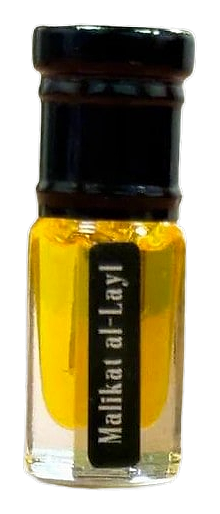
Malikat al-Layal translates to Queen of the Nights, and the name points exactly where this composition lives. Parijat, the night-blooming jasmine that releases its scent only after dark, is the whole point. This 2025 attar was built around that single obsession: the flower that opens when the world quiets down. No top notes, no bright citrus to lure you in. Just the bloom itself, in all its indolic, almost rotting beauty, the version of jasmine that perfume textbooks describe as "sultry" because no one wants to say the rest. The composition commits fully to its premise from first sniff to drydown. What hits the skin immediately is the green sting of crushed stems and leaves, that sharp chlorophyll note that real jasmine carries before the indole kicks in.
What separates this from a standard jasmine soliflore is the aged civet underneath. Civet has been a cornerstone of perfumery for centuries, used in trace amounts to add warmth, depth, and a musky sweetness that makes florals feel more alive. Here, the aged civet base doesn't hide. It sits beneath the jasmine like a second pulse, giving the composition a darkness the flower alone can't reach.
The evolution
The first minutes are pure jasmine, but not the soapy kind you'd find in shampoo. This is wet, almost fermented, a flower that's been sitting in warm air for hours. The indole content is high, which is perfumery language for "this smells like something between beauty and decay, and you're not always sure which." Around the 30-minute mark, the civet begins to surface. Not abruptly, it doesn't crash the party. It rises underneath, giving the jasmine a warm, musky floor that keeps everything grounded. After 2 hours, the jasmine softens. The sharpness fades into something rounder, almost honeyed, but the civet warmth remains, animalic but clean, like skin that's been warm for a while. The 4-6 hour drydown is where this earns its name: a quiet, persistent hum of night-blooming jasmine and civet, close to the skin, intimate. On fabric the next morning, you'll find a ghost of that original narcotic sweetness, surprisingly vivid for something this subtle.
Cultural impact
Malikat al-Layal enters a fragrance conversation that rarely gets translated into English. Arabian and South Asian perfumery traditions share deep roots in oud, rose, and the dense sweetness of animalic bases, and attars occupy a distinct category within that world. Where mainstream Western fragrance has spent decades chasing clean, safe, crowd-pleasing florals, compositions like this one stay loyal to materials that carry centuries of cultural weight. The parijat flower itself holds particular significance in Indian poetry and perfumery, celebrated for blooming only at night and releasing its strongest scent in darkness.