The Story
Why it exists.
The beginning
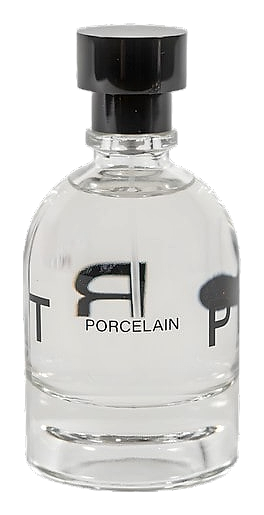
Porcelain began as an attempt to capture the shape of a memory rather than its content. Callum Rory Mitchell, the filmmaker behind Perdrisât, has described how some fragrances tell stories while others feel like objects. Porcelain aims for the second category, an experience that resists easy naming, that holds its form and waits. The fragrance opens with bright, volatile pear that immediately finds itself trapped inside something mineral and chalky. There's an unsettling quality to this top note, not unpleasant but disorienting, like the edge of something you can't quite identify. The mineral quality cuts through the fruitiness, preventing it from becoming sweet or cloying. As the pear fades faster than expected, that cool mineral-chalky layer becomes exposed, airy and spare.
What makes Porcelain's structure unusual is the refusal of resolution. Most fragrances move toward something, a warmth, a sweetness, a familiar accord that signals completion. Porcelain keeps its cool mineral core throughout, never fully capitulating to the pear sweetness or the powdery iris softness. The clay note is the key to this. It gives the fragrance a dusty, chalky quality that reads as both cool and slightly unsettling. Iris in this context behaves like a fossil of itself: present but mineral rather than floral, powdery rather than sweet.
The evolution
The opening hits bright and volatile. Ripe pear arrives first, but immediately caught inside something mineral-chalky, not unpleasant, but unsettling in the way the edge of something always is. A warm surface dusted with powder. The fruitiness retreats faster than expected, leaving that mineral-chalky layer exposed and airy. Someone once called it the smell of nail polish remover. The comparison makes sense: volatile, slightly chemical, but more like the scent of a threshold than a product. Then the clay comes through. Not garden earth, not mud. Dusty. Ancient. The warmth underneath begins to show through now: sun-warmed skin pressed against cool stone, the moment before heat transfers. Iris and musk don't announce themselves so much as surface. Fossilised versions of themselves. Close, powdery, intimate.
Cultural impact
Porcelain appeals to fragrance collectors who want something outside conventional niche releases. The mineral and clay character sets it apart from sweeter, more approachable compositions. For those seeking a fragrance that resists rather than seduces, this offers a different kind of olfactory experience. The cool mineral core and dusty powdery notes create something that asks for attention rather than immediately rewarding it. Those who connect with this composition tend to return to it repeatedly, finding something new in its restrained structure each time.