The Story
Why it exists.
The beginning
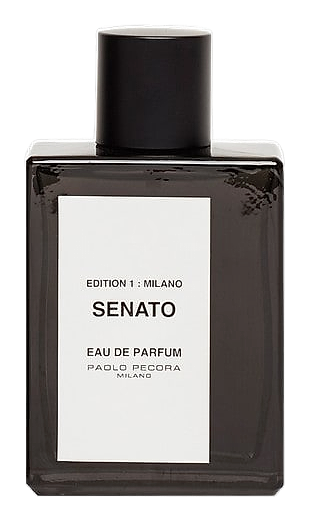
When Paolo Pecora Milano moved into fragrance, Senato was one of the four debut compositions, part of the Édition 1: Milano collection that translates Milan's neighborhoods into olfactory geography. The brand brought its sartorial instinct to scent. Antoine Lie, the perfumer, was tasked with capturing the particular character of a place rather than a marketing concept. Wormwood and cardamom for the brisk Milanese evening. Tonka for the warmth of amber-lit interiors. Oud for the weight of dark wood and old leather under streetlight. Senato doesn't announce itself. It occupies a room the way certain coats do, with cut and material doing the talking before anyone reads a label.
What makes Senato architecturally interesting is its restraint. Four notes across the entire pyramid, no padding, no decorative accord. Wormwood brings the bitter-green aromatic cold. Cardamom sharpens it into something almost mentholated, a prickle that lives just behind the sinuses. Tonka bean does the heavy lifting at the heart, offering warmth without sweetness, a vanilla-adjacent softness that reads as material rather than dessert. There's nothing gourmand about it, no caramelization, no cream. Just the quiet, slightly powdery warmth of something that's been cured or tanned.
The evolution
The first thirty minutes belong to the wormwood. It arrives green, slightly bitter, almost medicinal, the olfactory equivalent of cold air on bare skin. There's a cold-metal edge to it, something that reads more like January than June. Cardamom tightens everything, a clean heat that prickles rather than warms. There's something austere about this opening, almost intellectual. The composition refuses to seduce in the first quarter hour. It inspects. Around the forty-minute mark, the tonka starts to surface. It doesn't burst in. It seeps, like warmth conducting through wool. The bitterness recedes without disappearing, and the composition shifts from sharp to considered. By the two-hour mark, the oud has settled into its final form.
Cultural impact
Senato wears like a Milanese secret. It doesn't perform, doesn't project aggressively, doesn't ask to be the center of attention. The kind of fragrance that someone leans in to catch and remembers for days. Wearers describe a quiet authority, a scent for people who dress for themselves. Within the Édition 1: Milano collection, it reads as the most austere, the one that operates less as fashion accessory and more as personal architecture. It commits to a drier, more intellectual register, a composition that rewards patience over impulse. This is fragrance as tailoring: precise, restrained, and confident enough to leave space.