The Story
Why it exists.
The beginning
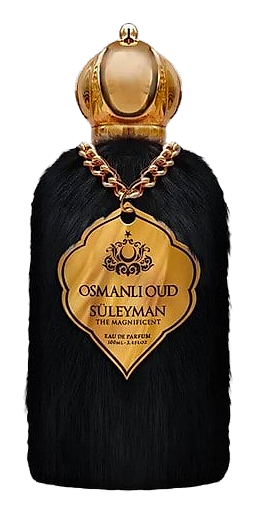
Süleyman the Magnificent joins Osmanli Oud's Sultanlar collection, a line of compositions built around figures from Ottoman history. The name belongs to one of the empire's best-known rulers, a sovereign whose reign has become inseparable from the era's most consequential moments. Osmanli Oud translates that scale into scent, drawing on a raw-materials library and a workshop practice built over decades of working with oud as the central material. Oud sits at the heart of the composition, the kind of ingredient the house has built its reputation around, treated here as the gravitational center rather than a supporting note. Vanilla anchors the opening, and a deep woody backbone carries the composition's full weight.
What makes this composition interesting is its restraint relative to its scale. Three layers, three families, no filler. Vanilla opens, cashmeran softens the middle, woods steady the base. Cashmeran is the hinge. A modern synthetic molecule with a suede-like warmth, it reads as texture rather than note, lending the composition a tactile softness that no natural material quite replicates at this weight. Paired with real woods and a generous vanilla, it bridges the gourmand and the dry. That tension is the fragrance: sweetness that never loses posture.
The evolution
The opening belongs to vanilla. Not shy, not sugar-sweet. Resinous, almost smoky, like vanilla pod scraped slow. It announces itself and doesn't apologize. Soon after, cashmeran steps forward and the composition shifts texture. The softness arrives like fabric brushed across skin. No floral lift, no sharp edges. Just a suede-like warmth that rounds everything out. The wood arrives late but doesn't fade quietly. Once it has taken over the base, the dry, dense, steady character of the oud dominates, and the vanilla recedes into the structure rather than disappearing. Sillage holds well into the first hours of wear, then tightens into something more personal, a low woody hum close to the skin. What remains at the end is wood, warm, faintly sweet at the edges, and unmistakably oud. The vanilla is gone. The cashmeran is gone. The wood stayed.
Cultural impact
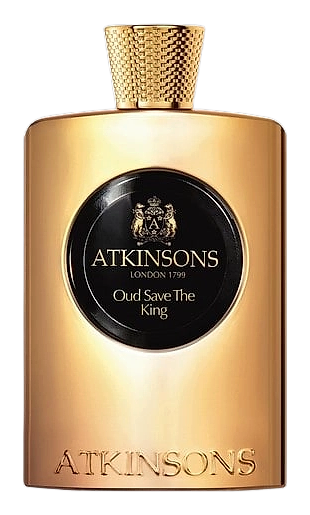
Within Osmanli Oud's Sultanlar collection, this composition sits alongside other historical portraits, framed less as a market piece and more as a wearable chapter of imperial history. Parfumo's listings note a similarity to Atkinsons' Oud Save the King in the way both compositions handle the oud-vanilla pairing. Wearers tend to describe it as a cold-weather companion, pulled out in autumn and on colder days when lighter compositions feel out of place. The weight and the wood density make it a piece that rewards cooler air, where the vanilla resin and the cashmeran warmth can develop without fighting the heat.