The Story
Why it exists.
The beginning
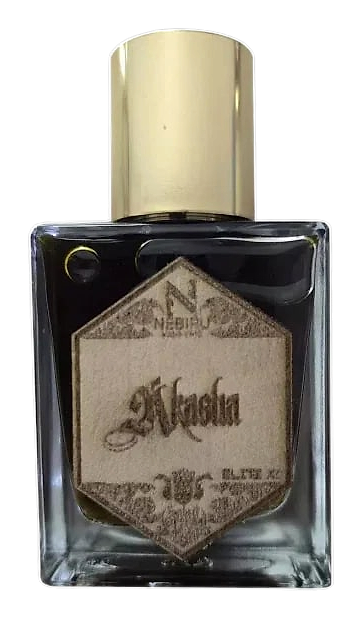
Akasha arrived in 2025 as part of Nebiru Parfvms' Linea Elite, composed by Frederic Gieselbach in the brand's second year of public releases. Gieselbach had been shaping the house around a clear aesthetic for years, building each composition with intention, and Akasha reads like an early statement piece. The name draws from Sanskrit thought, a term for the primordial ether, the subtle element from which all others emerge. For a composition built almost entirely on wood, smoke, and resin, that etymology fits the hand on the dial. The construction itself is dense: Malayan oud layered against Burmese brightness, then anchored with Taiwanese agarwood, each region contributing a distinct tonal weight.
What's genuinely unusual about Akasha is the breadth of its oud geography. The composition lists Malayan, Burmese, and Taiwanese ouds across both top and heart, and the differences between them become audible as the fragrance moves. The Malayan carries depth and a kind of wet funk, the Burmese opens up with a brighter, almost golden tone, and the Taiwanese agarwood anchors the whole structure with something drier and more austere.
The evolution
The opening is the loudest Akasha gets, and even that is restrained. Sichuan pepper and the hay hit first, a dry heat tinged with cut grass and dusty warmth, followed almost immediately by the oud collective, smoky, animalic, faintly medicinal. Myrrh threads through it like resin-soaked twine, binding the woods together with a slightly bitter edge. Nothing here announces itself, but everything registers. As the first hour passes, the opening's brashness settles into something quieter and more architectural. The Burmese and Taiwanese ouds deepen into a darker wood tone, almost leathery, while the vanilla starts surfacing from underneath, not sugary but warm, like sun on old cedar. Honeysuckle and neroli keep the composition from closing entirely, lending a faint white-floral lift that prevents the base from collapsing into pure resin. The drydown arc is honest.
Cultural impact
Akasha occupies a specific niche in contemporary oud composition, one that prioritizes regional wood distinctions over reformulated crowd-pleasers. The fragrance has drawn attention for its density, its willingness to sit in heavier resin territory without retreating, and its treatment of florals as structural support rather than decorative top notes. Among wearers who follow indie perfumery closely, the composition gets cited as an example of what agarwood-forward work can achieve when a perfumer works with multiple regional sources rather than collapsing them into a single blended note.