The Story
Why it exists.
The beginning
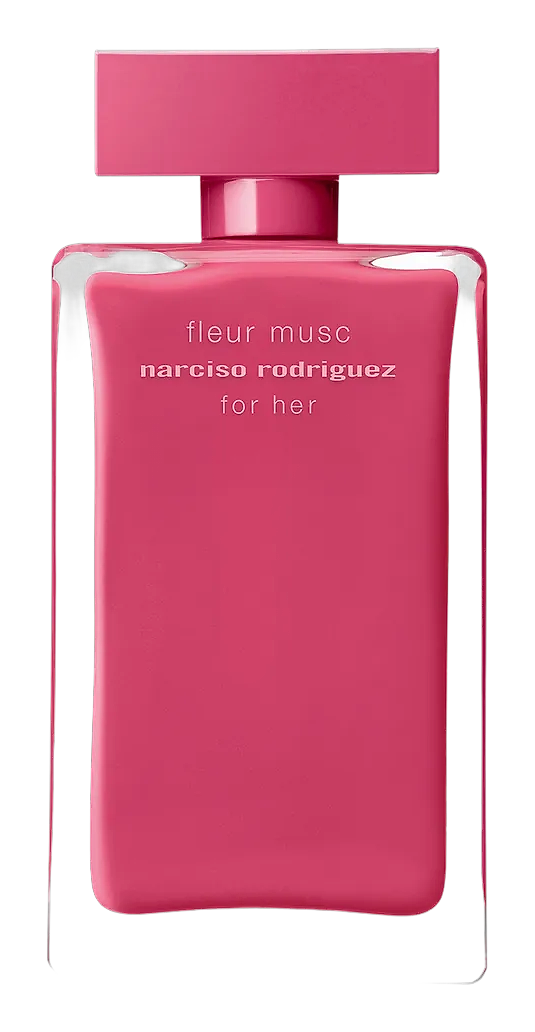
Fleur Musc arrived in 2017 as Narciso Rodriguez's answer to a question he'd been sitting with for years: what happens when you take the musk that defines his house and surround it with warm, rich pink flowers? The designer wanted a fragrance built around musc as its heart, not a supporting player but the protagonist, with pink florals creating something he called a unique rose. Calice Becker and Sonia Constant translated that vision into a composition where rose and peony rise through pink pepper's brightness, held together by a musk that never lets go.
The structure here is the story. Most fragrances use musk as a base note, something that arrives late and lingers. Fleur Musc keeps it in the heart, the musk IS the heart, beating beneath rose and peony from the first minutes to the last. Pink pepper at the top adds a brightness that prevents the florals from going sweet, while patchouli and amber in the base give the powdery warmth somewhere warm to land. The result is a fragrance that stays feminine without ever becoming soft.
The evolution
Pink pepper opens the door, bright, slightly spiced, an instant lift. Within minutes, rose and peony arrive in force, the peony adding a softness that keeps the rose from being too sharp. The musk begins its slow takeover in the heart phase, wrapping around the florals and turning them powdery, warm, intimate. By the drydown, patchouli anchors the composition while violet adds a final graceful note, and the musk persists, close to skin, persistent, warm. Hours in, it still smells like something worth wearing.
Cultural impact
The For Her collection redefined what a modern women's fragrance could be when it launched in 2003. Fleur Musc extends that legacy with a composition built for women who project independence with exquisite grace, to borrow the designer's own language. It's become one of the collection's most beloved flankers, praised for balancing femininity with an edge that keeps it from feeling predictable.