The Story
Why it exists.
The beginning
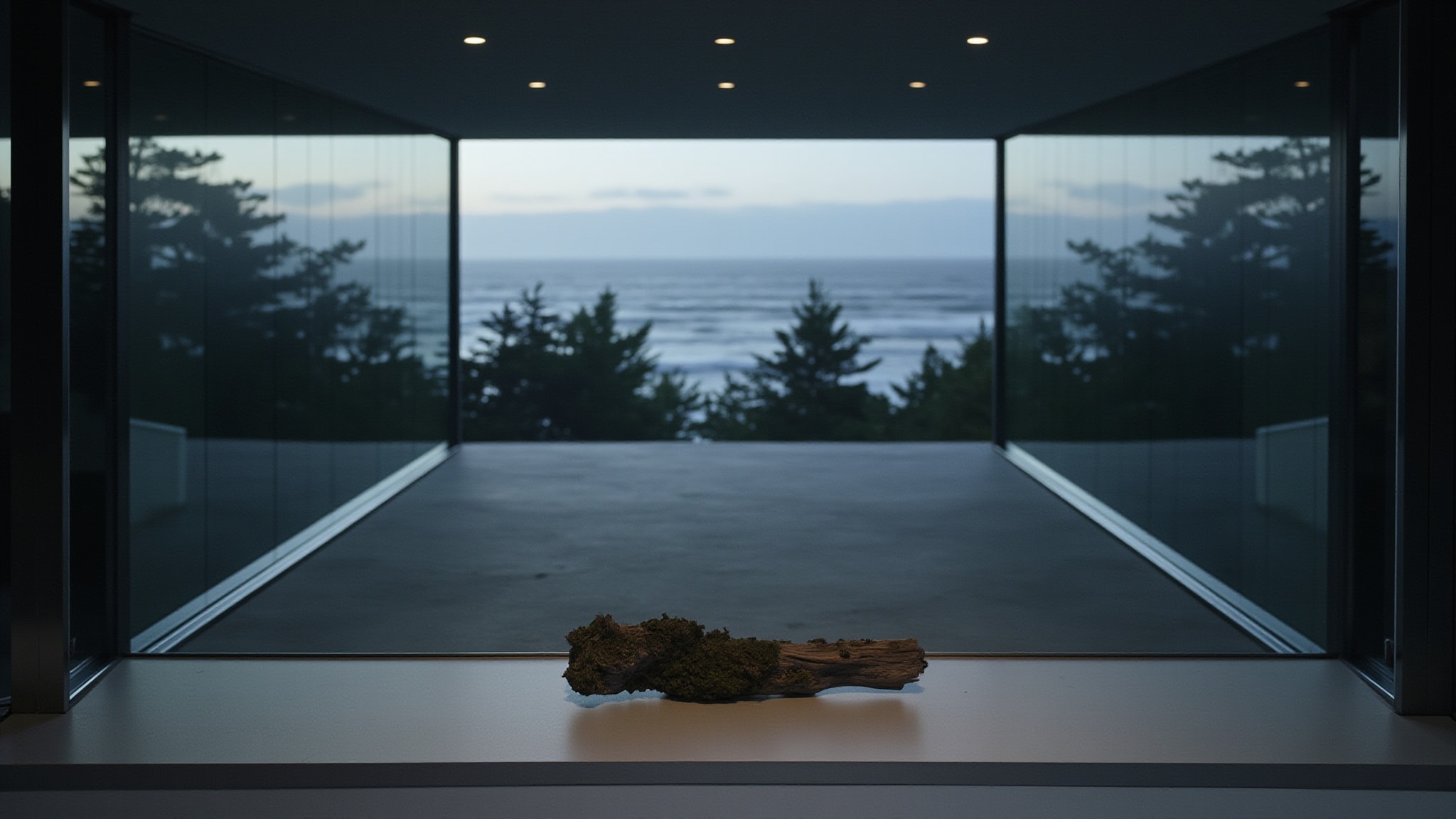
Greyhaven takes its name from the visual of shelter against grey skies, a place you come to when the coast gets cold. It was built for that specific feeling, not for a demographic or a trend. Sarah McCartney translated it into scent by starting at the edge: where evergreen forest meets open water, where the air carries both pine resin and brine. She built the composition around that boundary, not the beach, not the woods, but the exact line between them. The result is a fragrance that doesn't commit fully to either world, which is exactly the point. Greyhaven exists in the negotiation.
What makes this work is the white wine note anchoring the cedar. Wine in fragrance can read sweet or boozy, but here it's doing something more like terroir, the smell of something fermented and close to earth. It stops the conifer from becoming a Christmas candle. The spicy notes in the base are restrained, more warm air than spice rack. The whole structure stays cool and slightly damp, which is unusual: most woody fragrances dry down warm. Greyhaven stays close to the skin and keeps the green, even at the end. That's the specific thing it does that most woods fragrances don't.
The evolution
Greyhaven opens cold. The seawater hits first, not ozonic or synthetic-aquatic, but cold, like the moment you step out of a car at the coast and your lungs fill with something sharp. The pine follows immediately, resin-bright and barely sweet. For the first twenty minutes, it's a bracing opener. Then the marine note softens. The cedar and moss come forward together, creating something that smells like the forest floor after rain, not wet earth exactly, but the green exhale of living things. The white wine appears around the one-hour mark, subtle, adding a fermented warmth that stops the whole thing from reading too austere. By the drydown, the spices are quiet, the woods are close, and the wearer's skin smells like something that lasted.
Cultural impact
Greyhaven sits in the space between the indie fragrance community's love of atmospheric work and the broader market's appetite for accessible woods. It's not performing outdoorsiness, there's no loud conifer or aggressive marine accord. What it offers instead is specificity: a scent that reads as place, not category. Wearers describe it as the smell of the Pacific Northwest coast in fall, which is not a description that can be given to many fragrances. The 2022 launch came at a moment when the market was saturated with fresh-citrus and ambrox-heavy colognes. Greyhaven answered something different: the person who wants to smell like a place, not a product.