
The Story
Why it exists.
The beginning
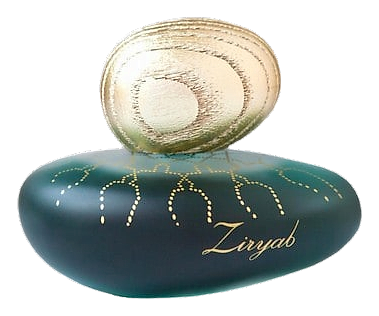
In 2017, Richard Ibanez composed Ziryab as an olfactory portrait of a man who refused to be contained by a single city. Ziryab was a 9th-century Iraqi poet, musician, and polymath, a true polymath in the classical sense. He fled Baghdad when the caliph's jealousy grew dangerous, and he carried everything he knew to Cordoba, where he became the genius of Andalusia. He added a fifth string to the oud. He founded the first conservatory of music in Europe. He shaped the vocal techniques that would eventually become flamenco. He codified how tables should be set, the order of dishes still used today. The perfume is composed in five stages, like the strings of his instrument. The fifth string is an audacity: the alliance of tulip, this watery, transparent, green note, with the rest of the composition. With oud. Two materials that shouldn't work together. They do.
The fifth string is where it gets interesting. Tulip and oud, a watery transparent green note meeting deep resinous wood. On paper, it reads like a mismatch. In the bottle, the tulip doesn't soften the oud. It sharpens it. Makes it more itself. The transparent quality pulls something electric from the wood, a clarity that makes the saffron and cedar feel more dimensional, not less. That's the audacity. Using a note usually associated with freshness and lightness to intensify something dark and resinous. The composition rewards patience. Five stages means five conversations happening at once, or in sequence, depending on how long you pay attention.
The evolution
The tulip arrives first. Translucent. Almost watery on the skin, green without being grassy, floral without being sweet. It announces itself immediately, close to the skin, not throwing itself across the room. Then the oud builds. Warm. Resinous. Deep. Saffron threads in, alongside cedar, a warm spiced quality that gives the fragrance its body. Leather underneath. The tulip doesn't disappear. It shifts, becoming greener, more mineral, as the wood deepens. A metallic shimmer threads through, slightly electric, almost like the smell of a stringed instrument being played. By the drydown, the layers resolve into amber. Warm. Close. The oud, saffron, and cedar fade together, leaving only this warm pulse that stays intimate and close for the remaining hours. The tulip lingers as a memory more than a note, a trace of green that surfaces when you move your wrist close to your face.
Cultural impact
Ziryab was the 9th-century musician who fled Baghdad for Cordoba, and in doing so, carried and transformed an entire culture. He introduced the five-string oud to Al-Andalus, changed fashion, cuisine, and social custom in one city. Naming a fragrance after him is a deliberate act, invoking the spirit of cultural transmission and innovation. The watery green tulip and the deep resinous oud work together to evoke that sense of bridge-building, East and West, past and present. The fragrance combines elements that might seem disparate into something cohesive, and that tension is what makes it thought-provoking and worth discussing.