The Story
Why it exists.
The beginning
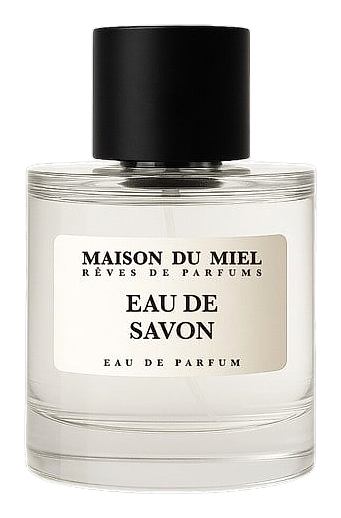
Eau de Savon does not reach for poetry. Soap water. The most ordinary phrase imaginable for something that turned out to be quietly complex. The name alone is deliberately plain, and the fragrance itself honors that plainness. A soapy accord opens the composition, sharp enough to read as clinical, with an icy chill that prevents any nostalgic quality. This is not vintage soap. This is current soap, the kind that does not try to be anything else, that arrives without apology and without embellishment. As the top notes settle, rose and iris appear in the heart of the composition. Cool rose and powdery iris. These are the notes that prevent clean from flattening into nothing, that give the overall impression the depth it needs to linger rather than simply dissipate.
White musk anchors the drydown of this composition, providing a clean base that persists into the final hours of wear. Myrrh gives the base its character, a dry and slightly resinous quality that reads as mineral rather than sweet. The combination creates a clean that operates in a different register entirely, not the warmth of skin but the coolness of skin that has just been washed. There is something precise about this drydown, something that evokes the cleanliness of a laboratory or a gallery space, or the hush of early morning before anyone else has arrived.
The evolution
The opening arrives immediately. Soap and ice present themselves simultaneously, not layered in sequence but co-occurring from the first moment. The aldehydic quality of the soap accord is immediate and sharp, almost astringent in its precision. There is no ambiguity in the first minute. The soap accord either resonates or it does not, and that initial response tends to shape everything that follows. When it does work, the next few minutes unfold with a satisfying sense of intentionality. The transition between opening and heart takes place gradually, roughly fifteen to twenty minutes, as the sharp top notes begin to soften and make room for what comes next. Rose and iris arrive together, neither competing nor quite harmonizing, occupying the same space in the composition. The rose registers as cool rather than romantic, more like a concentrated attar than a bouquet.
Cultural impact
Eau de Savon arrives in a context where clean has become its own distinct category. The aldehydic opening functions as a deliberate choice rather than a limitation. The question is not whether it smells good. It smells exactly like what it intends. The question is whether that intention appeals. For those who find meaning in precision over warmth, it does.