The Story
Why it exists.
The beginning
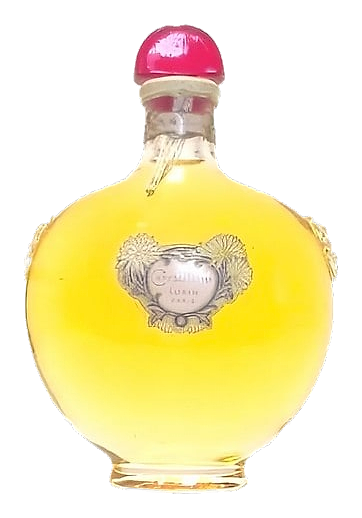
In 1913, Lubin introduced a fragrance that distilled the character of a single flower into bottle form. The name Chrysanthème, taken directly from the blossom at its center, reflects an approach that values directness over decoration. The composition reads as herbal and floral from the first moment, carrying a fresh-spicy dimension that gives the scent its distinctive edge. Rather than burying the chrysanthemum beneath layers of competing materials, the formula lets the bloom speak with unusual clarity. It's a study in how a single botanical, handled with precision, can carry an entire composition on its own terms. The result feels less like an assemblage of notes and more like a portrait, one flower, rendered in scent, allowed to occupy the full frame.
What makes this composition worth noticing is its restraint. The chrysanthemum holds the central position, and everything around it exists in service to that single character. The supporting florals don't attempt to overshadow or compete. They create a soft frame that allows the main bloom to maintain its presence throughout the wear. The effect is a fragrance that reads as one continuous gesture rather than a series of competing declarations. Each accord contributes to a unified whole, and the transitions between them feel deliberate rather than abrupt.
The evolution
The first spray delivers a crisp brightness that announces the herbal character of the composition. That opening carries a green quality, lively and slightly raw, that announces the floral heart to come. The freshness gradually softens as the chrysanthemum settles into focus, revealing its cool, slightly bitter-herbal profile without ever tipping into sweetness or powder. As the composition develops, it draws closer to the skin, shifting from a bright announcement into something warmer and more ambiguous. The initial sharpness dissolves, replaced by a low, steady floral warmth that hums beneath the surface. In its later stages, the scent becomes increasingly intimate, a skin-close presence that feels less like an applied fragrance and more like a quality the wearer carries.
Cultural impact
Chrysanthème represents a particular kind of fragrance, one built around a single botanical presence rather than a complex architecture of competing materials. The composition's emphasis on clarity and directness places it within a recognizable category of floral-focused work that values the integrity of its central ingredient. The chrysanthemum itself, with its cool, slightly bitter-herbal profile, offers something different from the more common floral stars of European perfumery. It's a flower that carries its own distinctive character, less sweet than rose, less indolic than jasmine, more vegetable than either.