The Story
Why it exists.
The beginning
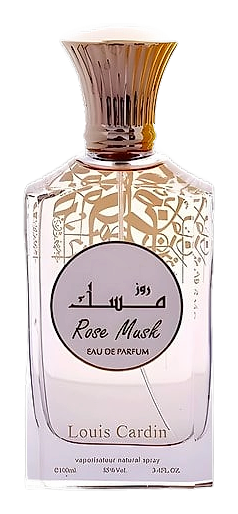
Rose Musk arrived in 2020, during a stretch when Louis Cardin was steadily padding out its catalogue with compositions aimed at everyday wear rather than statement pieces. The name gives away the brief: take two of perfumery's most reliably crowd-pleasing materials, rose and white musk, and build something around them that doesn't ask too much of the wearer. It fits the house's broader philosophy of measured, accessible fragrance. Louis Cardin built its reputation first in the 1990s as a watchmaker in the United Arab Emirates, then moved into scent in 2011. By the time Rose Musk arrived, nearly a decade of perfume production had refined the house's approach: consistent formulas, tested batches, and compositions that prioritize drinkability over drama. Rose Musk reads as an exercise in that approach. Two opening fruits. One floral heart. One base. Nothing complicated, nothing divisive.
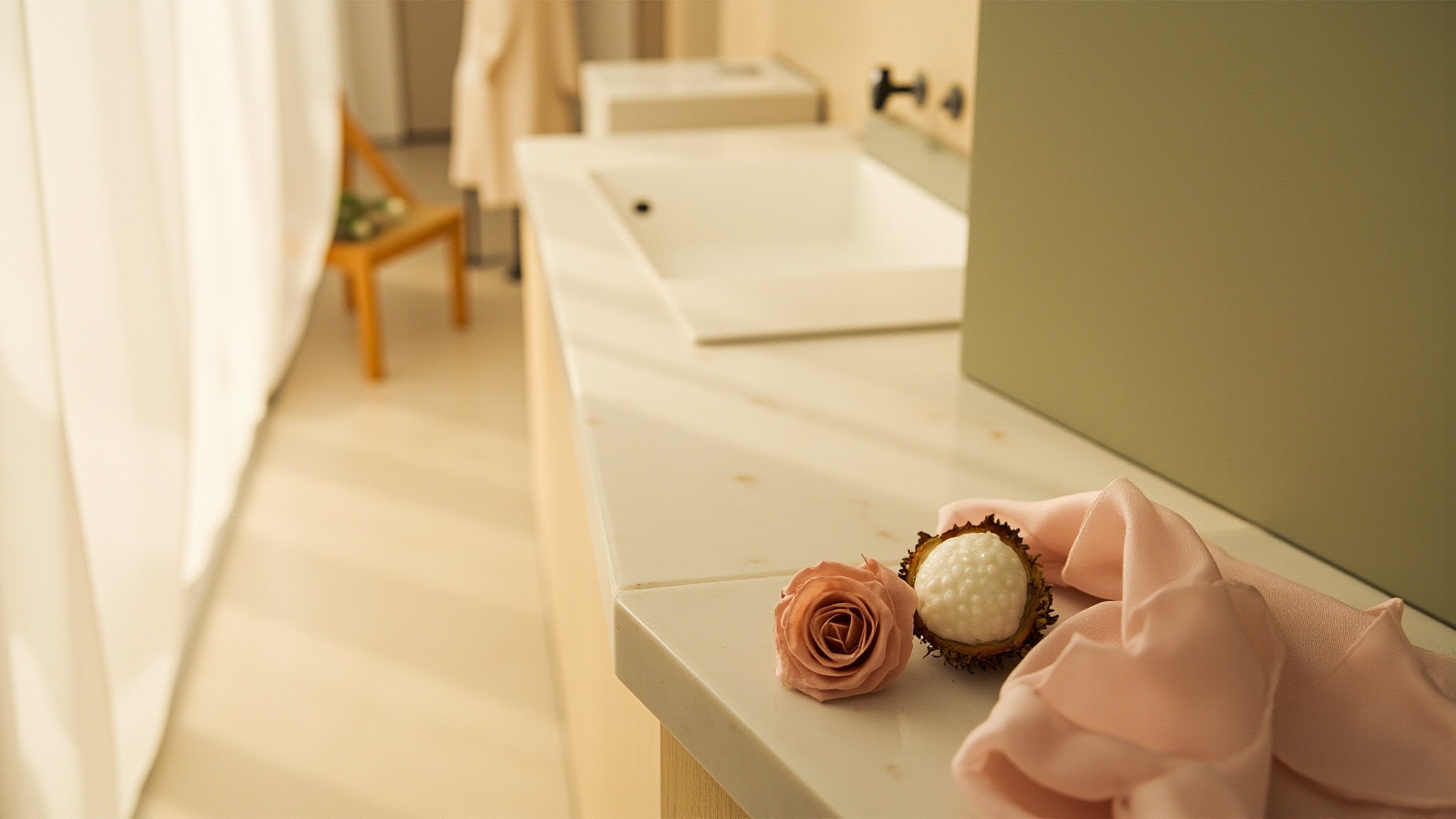
The composition is notable for what it leaves out. No oud, no heavy resins, no smoky base to anchor the floral. Just blackcurrant and lychee up top, rose in the middle, white musk at the bottom. That restraint is harder to execute than it looks. A rose without a darker base can read as thin or soapy, so the lychee serves a structural purpose as much as a sweet one. Its tropical juiciness gives the opening enough body to carry the transition into rose without a jarring shift. The white musk then does the quiet work of holding everything together in the drydown, adding a skin-like warmth that keeps the composition from feeling like three disconnected ideas stapled together.
The evolution
The first spray is a fruit-forward burst. Blackcurrant's tart edge lands first, almost jammy, then the lychee lifts it into something brighter and more tropical. This opening phase lasts roughly 30 minutes, which is generous for a fruity top. The transition into the heart is gradual rather than abrupt. The lychee fades but doesn't vanish, leaving a sugary residue that the rose blooms through. The rose here reads as a classic, slightly powdery floral rather than a dense Turkish or damascene variety. It stays prominent for about 2 to 3 hours. The white musk arrives in the final stretch, not as a separate layer but woven through the fading rose, lending a soft, almost creamy texture to what's left. The overall arc runs 4 to 6 hours, with the fragrance staying close rather than projecting widely. On fabric, the lychee sweetness can linger noticeably into the next day. The scent does not transform dramatically between phases; it compresses, getting quieter and more skin-like as the hours go by.
Cultural impact
Rose Musk by Louis Cardin sits within a long tradition of rose-led fragrances that have shaped how Western and Middle Eastern perfume culture understands femininity, romance, and softness. The rose note itself carries more cultural weight than nearly any other ingredient in perfumery, appearing in religious rituals, royal courts, and folk medicine for centuries, and it remains the most widely cultivated flower in the fragrance industry today. Musk, the other pillar of the composition, has its own layered history: natural deer musk was once so prized that it was reserved for emperors and aristocrats, while the modern synthetic musks that dominate contemporary perfumery were developed in part to democratize that same warm, skin-like aura for everyday wearers.